A broken gate, a blind spot in camera coverage, a vendor door left propped open, an event crowd flow that looks fine on paper but fails under pressure – most security problems do not start as dramatic incidents. They start as unmanaged risk. That is the practical answer to what is risk management in physical security: a disciplined process for identifying where your people, property, and operations are exposed, then putting the right controls in place before those exposures become losses.
For business owners, property managers, operations leaders, and event organizers, risk management is not separate from physical security. It is the framework that makes security decisions rational, cost-aware, and operationally useful. Without it, security becomes reactive. You add guards after a trespassing issue, improve access control after a theft, or change event staffing after a disturbance. With risk management, you plan ahead based on likely threats, known vulnerabilities, and the consequences of failure.
What is risk management in physical security?
In physical security, risk management is the process of assessing threats, vulnerabilities, and impact so an organization can reduce the likelihood of incidents and limit damage when they occur. It connects day-to-day security measures – like access control, patrols, alarm response, visitor screening, lighting, and officer presence – to specific business risks.
That business connection matters. A warehouse, a retail center, a medical office, a corporate campus, and a special event may all need security, but the risk profile is different in each case. A property storing high-value equipment may prioritize perimeter control and after-hours patrol. A public-facing office may care more about visitor management and workplace violence prevention. A concert venue may focus on ingress, crowd behavior, emergency egress, and rapid incident response. Risk management helps define what actually needs protection, from whom, and at what level.
This is also where many organizations get physical security wrong. They invest in visible measures that appear strong but are not aligned with their actual exposure. More cameras do not automatically fix poor access control. More guards do not compensate for unclear post orders or weak site procedures. Good risk management is not about adding the most security. It is about applying the right security in the right places for the right reasons.
The three parts of a physical security risk picture
Every physical security plan starts with three variables: threat, vulnerability, and consequence. Threat is the source of harm. That could mean theft, vandalism, trespassing, workplace violence, protest activity, insider misconduct, or targeted criminal behavior. Vulnerability is the weakness that allows the threat to succeed, such as broken fencing, poor key control, understaffed entry points, or limited officer visibility. Consequence is the business impact if the event happens – injury, downtime, liability, property loss, reputational damage, or interruption to customer service.
Risk sits where those three meet. A threat with low likelihood but catastrophic impact may still need serious attention. A common nuisance issue with limited financial loss may justify a simpler control. This is why physical risk management is rarely one-size-fits-all. It depends on location, operating hours, public access, staffing patterns, asset value, prior incidents, and how much disruption the business can tolerate.
In California and Nevada especially, site conditions can vary sharply from one property to the next. A downtown mixed-use building, a suburban logistics site, and a large outdoor event each present different exposures. The right response is based on conditions on the ground, not generic assumptions.
How risk management works in physical security practice
The process usually begins with assessment. A security team studies the site, the operation, and the history of incidents. They look at perimeter integrity, lighting, camera placement, entry procedures, guard coverage, alarm protocols, delivery access, emergency exits, and how employees or visitors move through the space. They also review what the business needs to preserve – safety, continuity, privacy, revenue, compliance, or public confidence.
The next step is prioritization. Not every vulnerability deserves the same investment. A side gate that creates direct access to high-value inventory may deserve immediate correction. A low-traffic area with minor visibility issues may be monitored and addressed later. Strong security planning uses resources where they have the most effect.
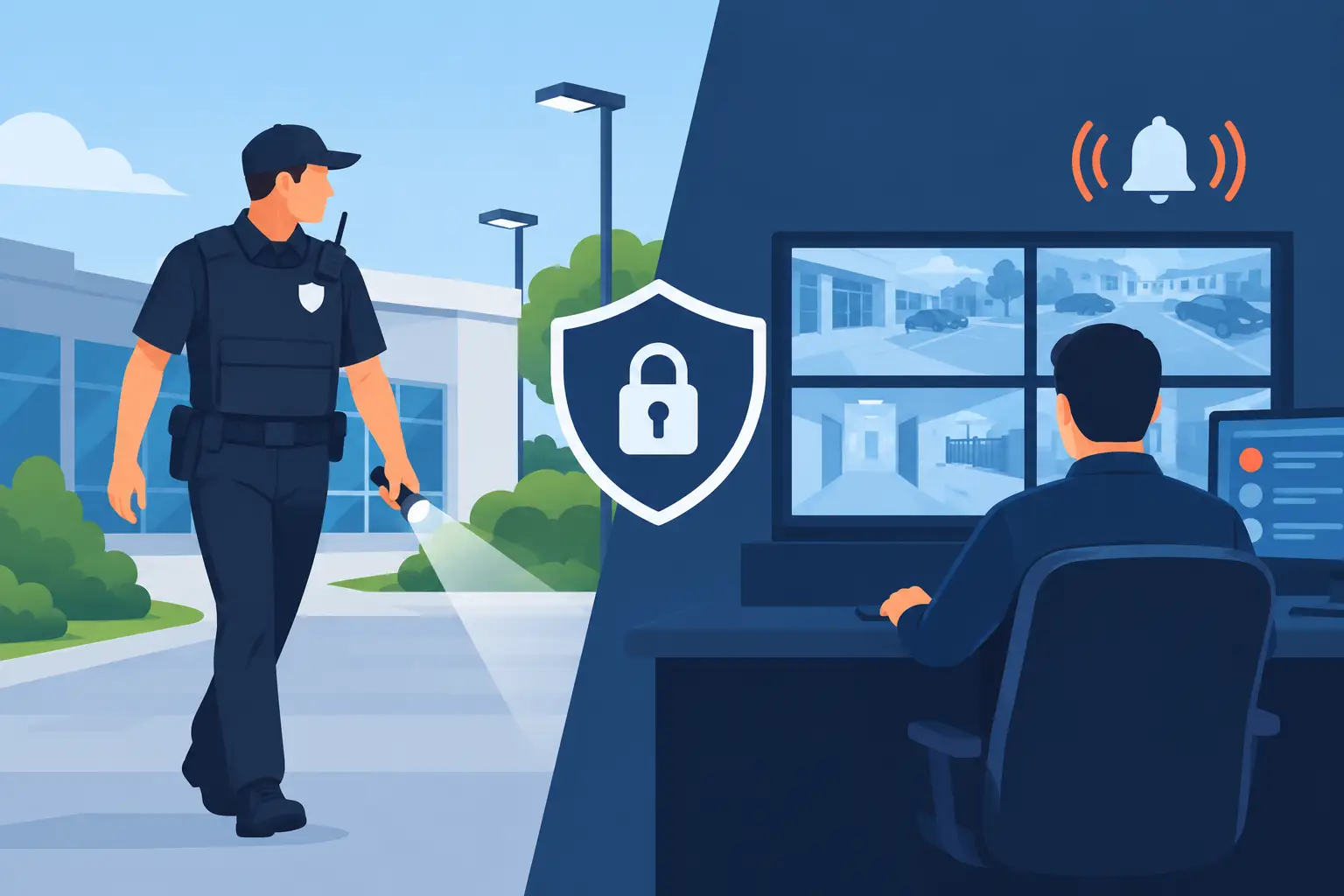
Then comes mitigation. That can include physical improvements like locks, barriers, lighting, cameras, and badging systems. It can also include operational measures such as trained officers, mobile patrol, visitor procedures, package screening, emergency communication, post orders, and escalation protocols. In many environments, the strongest control is not a device but a trained presence that can detect early warning signs and respond quickly.
After mitigation, the process does not stop. Risk management requires regular review. Staff changes, construction, seasonal traffic, new vendors, changing crime patterns, and special events can alter a site’s exposure. A plan that worked six months ago may not be enough now.
Why risk management matters more than isolated security measures
Organizations often buy security in pieces. They install cameras one year, add guard coverage later, and update access control only after a problem. The issue is not that these measures are wrong. The issue is that isolated measures often leave gaps between systems, people, and procedures.
A camera may record an incident without preventing it. A guard may be present but lack site-specific instructions. An access control system may restrict front-door entry while a loading area remains unsecured. Risk management in physical security brings those pieces together so they work as a coordinated protective system.
It also helps leadership make better financial decisions. Security budgets are not unlimited. Decision-makers need to know which investments reduce liability, support continuity, and improve response capability. A structured risk approach gives that clarity. It supports a stronger return on security spending because protection is tied to actual exposure, not guesswork.
There is another practical advantage: less disruption. A well-designed physical security plan should support business operations, not interfere with them. That means screening where it makes sense, staffing where visibility matters, and using procedures that protect employees and visitors without creating unnecessary friction. This balance is especially important for commercial properties, active workplaces, and public-facing events.
What a good physical security risk management plan includes
A sound plan is specific to the environment. It should define critical assets, likely threats, vulnerable points, current controls, response expectations, and areas that need improvement. It should also clarify roles. Who monitors access issues? Who responds after hours? What does a guard do when a delivery driver appears at a restricted entrance? How are suspicious persons handled? What happens if an incident affects business operations or public safety?
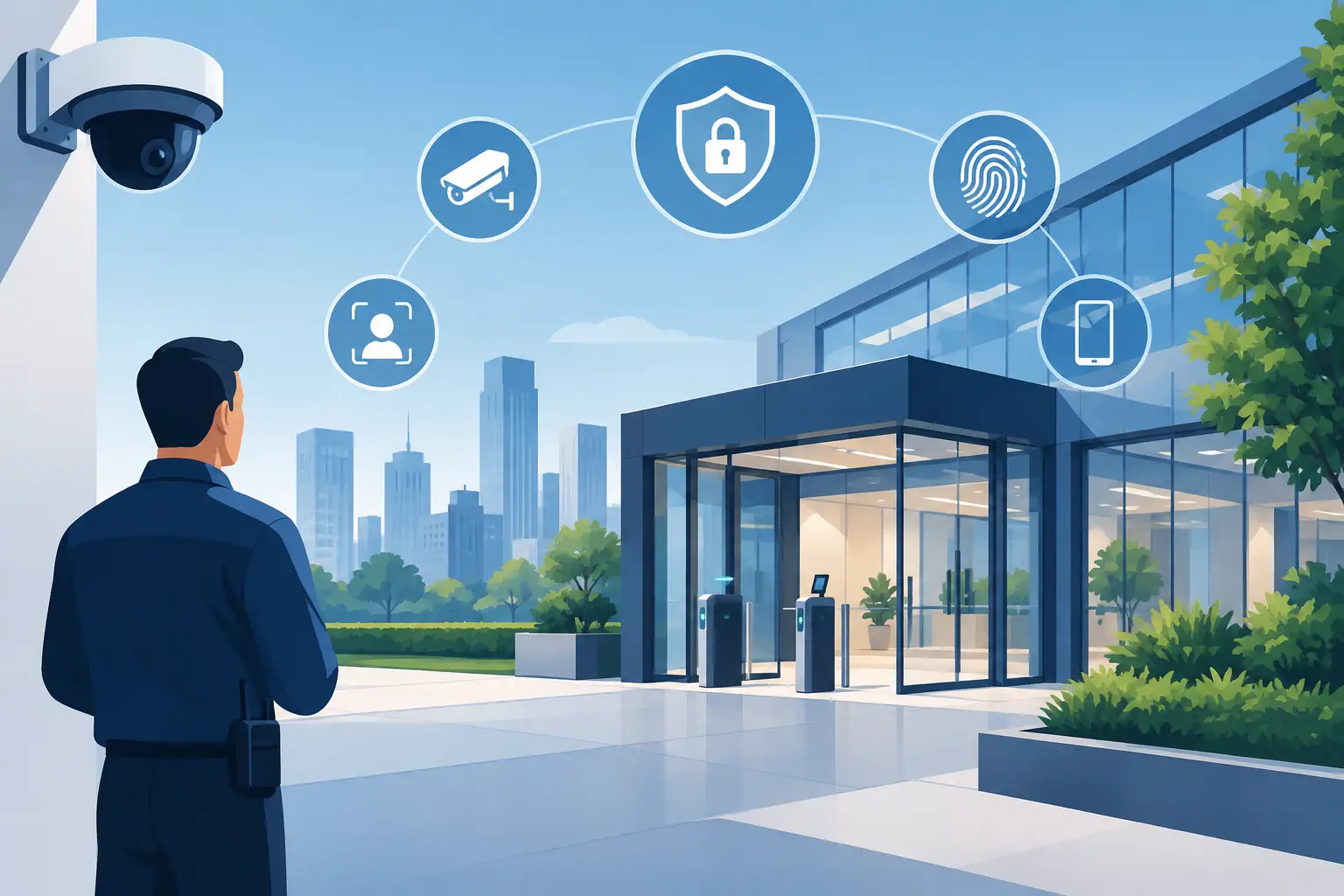
Good planning also accounts for layered security. One control should not carry the full load. For example, perimeter barriers can slow intrusion, cameras can support detection, access protocols can reduce unauthorized entry, and on-site officers can intervene in real time. If one measure fails, others still help contain the problem.
Training is equally important. A site may have strong technology and still underperform if employees, contractors, or front-desk personnel do not understand procedures. Many incidents happen because policies exist on paper but are not followed consistently. Risk management closes that gap by aligning people, policy, and protective measures.
For organizations with multiple locations, consistency matters, but so does local adaptation. Corporate standards are useful, yet each site may face different crime patterns, occupancy levels, tenant concerns, or event demands. That is why experienced providers tailor the plan rather than forcing every property into the same model.
Common mistakes organizations make
One common mistake is focusing only on visible threats. External risks matter, but insider access, procedural shortcuts, and weak key or credential control can be just as serious. Another is assuming technology alone will solve a security problem. Technology helps, but without monitoring, response, and accountability, it often becomes expensive documentation after the fact.
A third mistake is treating security as a fixed setup rather than a living process. Businesses change. Occupancy changes. Threat patterns change. Physical risk management has to keep pace.
This is where experienced security partners provide value beyond staffing. A veteran-led firm with strong field discipline can do more than place officers on-site. It can assess the environment, identify weak points early, develop practical post orders, and build a protection plan that fits how the client actually operates. For many organizations, that operational discipline is what turns security from a line item into a working safeguard.
What decision-makers should ask
If you are evaluating your current security posture, start with a simple question: what would hurt this operation most, and how easily could it happen here? That leads to better conversations about entry points, after-hours exposure, staff safety, visitor management, incident history, emergency response, and continuity planning.
The right answer is not always more coverage. Sometimes it is better coverage. Sometimes it is revised procedures, stronger supervision, better patrol timing, or clearer coordination between officers and site leadership. The point of risk management is to make those distinctions before a weakness becomes a costly event.
Physical security works best when it is planned with the same seriousness as any other operational function. When risk is understood clearly, security becomes more effective, more accountable, and easier to integrate into daily business. That is what decision-makers should expect from a professional protection strategy – not just presence, but preparedness that supports the mission every day.