A broken gate, an unmonitored side entrance, a distracted front desk, and no clear incident protocol – that is often how real security problems begin. If you are asking what is physical risk management, the short answer is this: it is the process of identifying, reducing, and responding to threats that could harm people, property, or business operations.
For business owners, property managers, and operations teams, physical risk management is not limited to hiring a guard or installing cameras. It is a practical security discipline built around prevention, visibility, response, and continuity. The goal is to reduce the chance of incidents and limit the damage when something does happen.
What Is Physical Risk Management in Business Settings?
Physical risk management is the structured effort to protect a site, facility, event, or organization from real-world threats. Those threats can include theft, trespassing, vandalism, workplace violence, unauthorized access, property damage, civil unrest, and operational disruption caused by emergencies or poor site control.
In a business setting, this work starts with understanding what needs protection and what could realistically go wrong. A warehouse has different exposures than a corporate office. A retail center faces different risks than a private event or a health care facility. Good physical risk management matches the protection plan to the environment instead of applying the same security measures everywhere.
That is where many organizations get it wrong. They buy equipment before they define the problem. They react after an incident instead of evaluating weak points early. Or they add visible security measures that create friction for employees, tenants, guests, or customers without fixing the actual vulnerability.
Physical Risk Management Is More Than Guarding
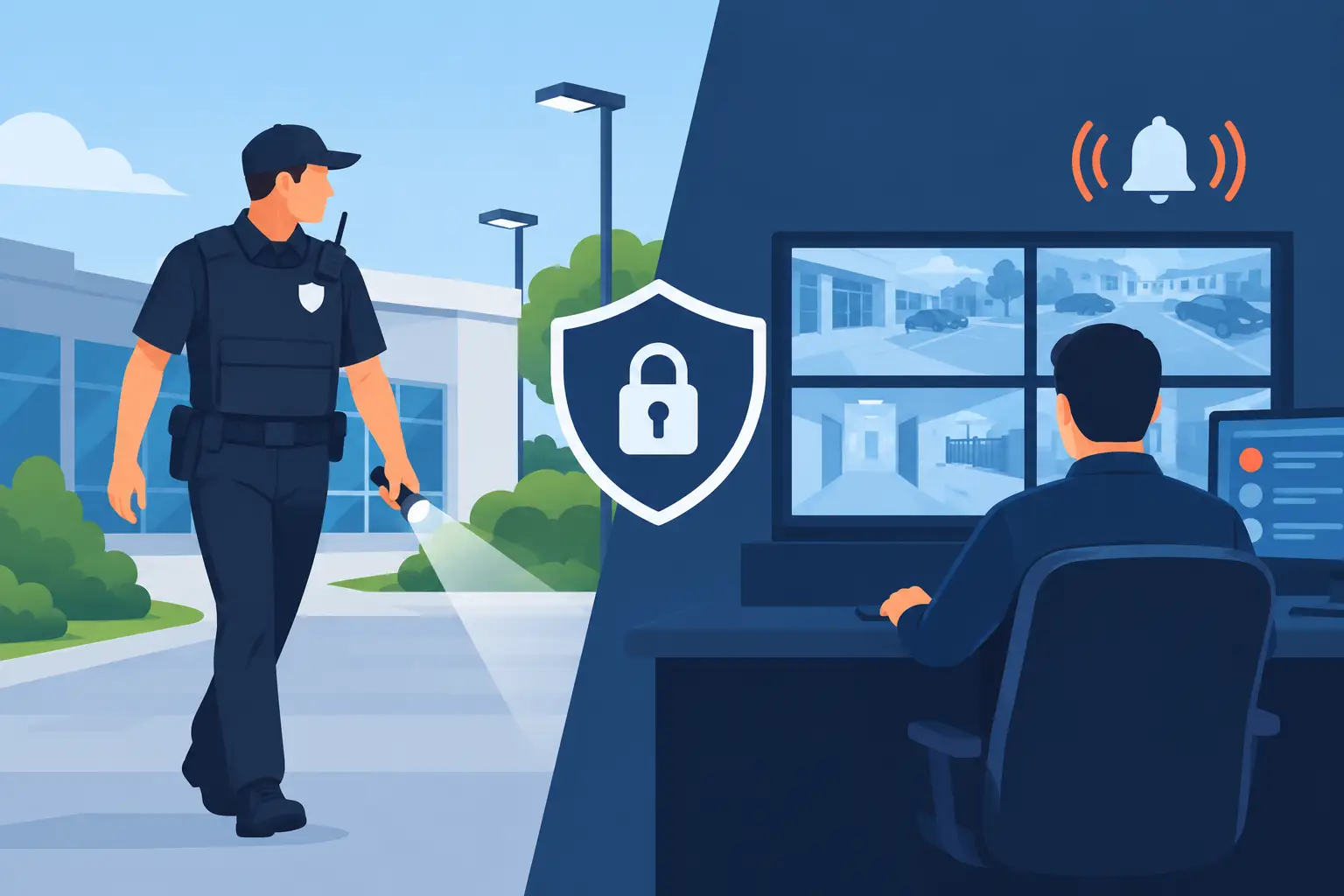
Security officers are often part of the solution, but they are not the entire strategy. Physical risk management combines people, procedures, technology, and site design into one operating plan.
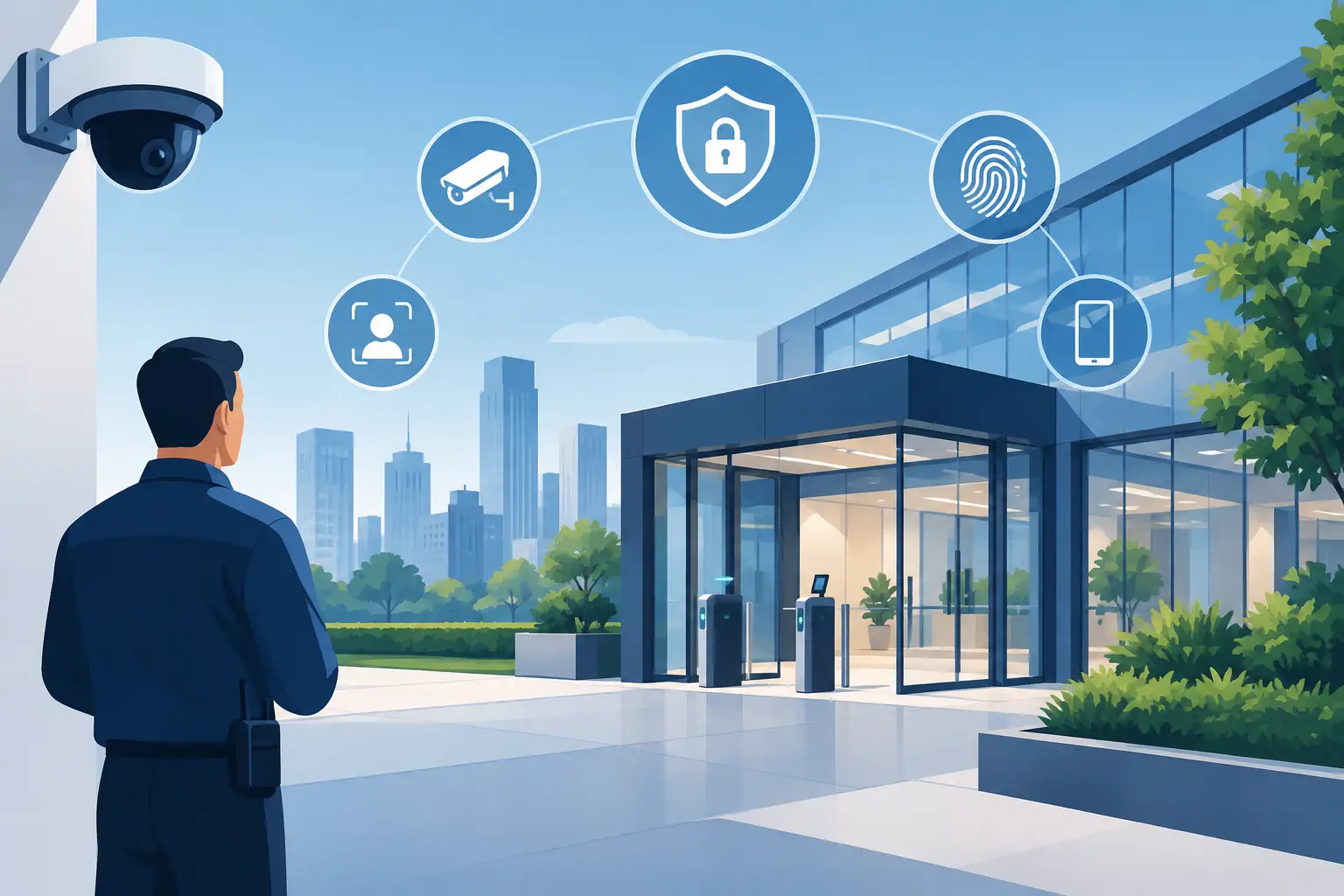
People include trained officers, supervisors, reception personnel, managers, and anyone responsible for reporting concerns or controlling access. Procedures cover visitor management, key control, opening and closing protocols, emergency response, and escalation steps. Technology may include cameras, alarms, access control systems, lighting, early detection tools, and communication equipment. Site design involves things like entry layout, barriers, sightlines, parking lot visibility, and how easily someone can move through the property without challenge.
If one of those areas is weak, the rest may not be enough. A facility can have quality cameras, but if no one monitors them or reviews alerts, the system loses value. A property can have on-site officers, but if access points are poorly planned, officers end up reacting to problems instead of preventing them.
The Core Purpose of Physical Risk Management
At its core, physical risk management serves three business needs. It protects people from harm, protects assets from loss or damage, and protects operations from disruption. Those three priorities often overlap.
For example, an unauthorized person entering a commercial facility is not just a theft concern. It can become a safety issue for staff, a liability issue for management, and a continuity issue if the incident forces a shutdown or investigation. A strong security posture reduces the chance that one event turns into several business problems at once.
This is why decision-makers should think beyond crime alone. Physical risk also includes natural disasters, protests, internal misconduct, emergency evacuations, contractor access problems, after-hours vulnerabilities, and gaps in communication during fast-moving incidents. The best plans account for routine daily exposure as well as low-frequency, high-impact events.
How Physical Risk Management Works
The process usually begins with a site assessment. This is where a security professional reviews the property, operations, traffic flow, existing controls, known concerns, and likely threat scenarios. The purpose is not to create fear. It is to separate theoretical risks from realistic ones.
From there, the organization prioritizes vulnerabilities. Not every risk deserves the same investment. A poorly lit parking area with a history of incidents may require immediate action. A low-traffic storage room may be a lower priority. Effective physical risk management is about using resources where they will have the most practical impact.
Once priorities are clear, protective measures are selected and implemented. That may include staffing changes, patrol schedules, access control upgrades, perimeter improvements, policy updates, incident reporting procedures, or event-specific coverage plans. Training is a major part of this stage because even strong procedures fail when employees and contractors do not follow them.
Then comes ongoing review. Threats change. Tenant mix changes. Business hours change. Construction, staffing shortages, seasonal activity, and local crime patterns all affect security exposure. Physical risk management is not a one-time checklist. It is an active process that should adapt as the environment changes.
Common Examples of Physical Risk
The most common physical risks are often the least dramatic. A delivery entrance left unsecured. Employees propping open doors. Visitors entering without verification. Blind spots in camera coverage. No clear response plan for aggressive behavior. Weak communication between front-of-house staff and security personnel.
Larger risks may include organized theft, targeted trespassing, threats against executives, active disturbances at events, or vulnerabilities at critical infrastructure sites. In California and Nevada, many organizations also have to think about wildfire impacts, power disruptions, and evacuation planning as part of the physical risk picture.
The right response depends on the site and the stakes involved. A school, financial institution, distribution center, hotel, and construction site all need physical protection, but not in the same form or at the same level.
Why Businesses Need a Real Strategy
Many organizations operate with informal security habits instead of a true risk management plan. That may work for a while, especially if there has not been a recent incident. But a calm period is not proof that a site is properly protected. Often, it simply means vulnerabilities have not been tested yet.
A real strategy gives leadership better control over liability, response time, and operational stability. It also improves decision-making. When an issue occurs, teams know who responds, how the area is secured, when law enforcement is called, how documentation is handled, and how business operations continue.
This matters for insurance exposure, employee confidence, tenant relationships, and customer trust. It also matters for reputation. A poorly handled incident can damage confidence faster than the incident itself.
What Good Physical Risk Management Looks Like
Good physical risk management is visible where it needs to be and discreet where it should be. It supports daily operations instead of getting in the way. Staff know what to do. Visitors move through the site in a controlled but professional manner. Security presence is competent, calm, and responsive.
It also reflects the reality of the environment. High-risk sites may need armed coverage, strict access control, and rapid response capability. Lower-risk sites may need a mix of patrol, surveillance review, and stronger procedures. There is no single formula, and that is exactly the point. Effective protection is customized.
A veteran-led security partner will usually approach this with more than a staffing mindset. The focus is not just filling a post. It is understanding the mission, evaluating exposure, and building a protection plan that fits the client’s operations. For companies that cannot afford disruption, that distinction matters.
Physical Risk Management and Business Continuity
One of the most overlooked benefits of physical risk management is continuity. Security is not only about stopping bad outcomes. It is also about keeping the business functioning when pressure hits.
If a site has clear protocols, trained personnel, controlled access, and coordinated incident response, recovery is faster. Managers spend less time improvising. Employees have more confidence. Customers and tenants see order instead of confusion.
That does not mean every risk can be eliminated. It cannot. Security decisions always involve trade-offs between cost, convenience, visibility, and coverage. But the absence of a plan creates its own cost, and it is often much higher than organizations expect.
For organizations evaluating their next step, the right question is not whether risk exists. It is whether your current security posture matches the level of responsibility your people, property, and operations require. When physical risk management is done correctly, protection becomes part of how the business stays ready, credible, and open for business.