A property manager receives a call about a rear gate left open at 2:00 a.m. A distribution center needs someone at its employee entrance before the first shift arrives. A retail center has recurring after-hours trespassing across a large parking area. Mobile patrol vs static guards is not a simple choice between two security services. It is a coverage decision that affects deterrence, response time, visibility, operating cost, and business continuity.
The right model starts with a practical question: where is the risk, and does it require a trained officer to be present at one fixed point or actively moving through the property? For many organizations, the answer is a combination of both.
Mobile Patrol vs Static Guards: The Core Difference
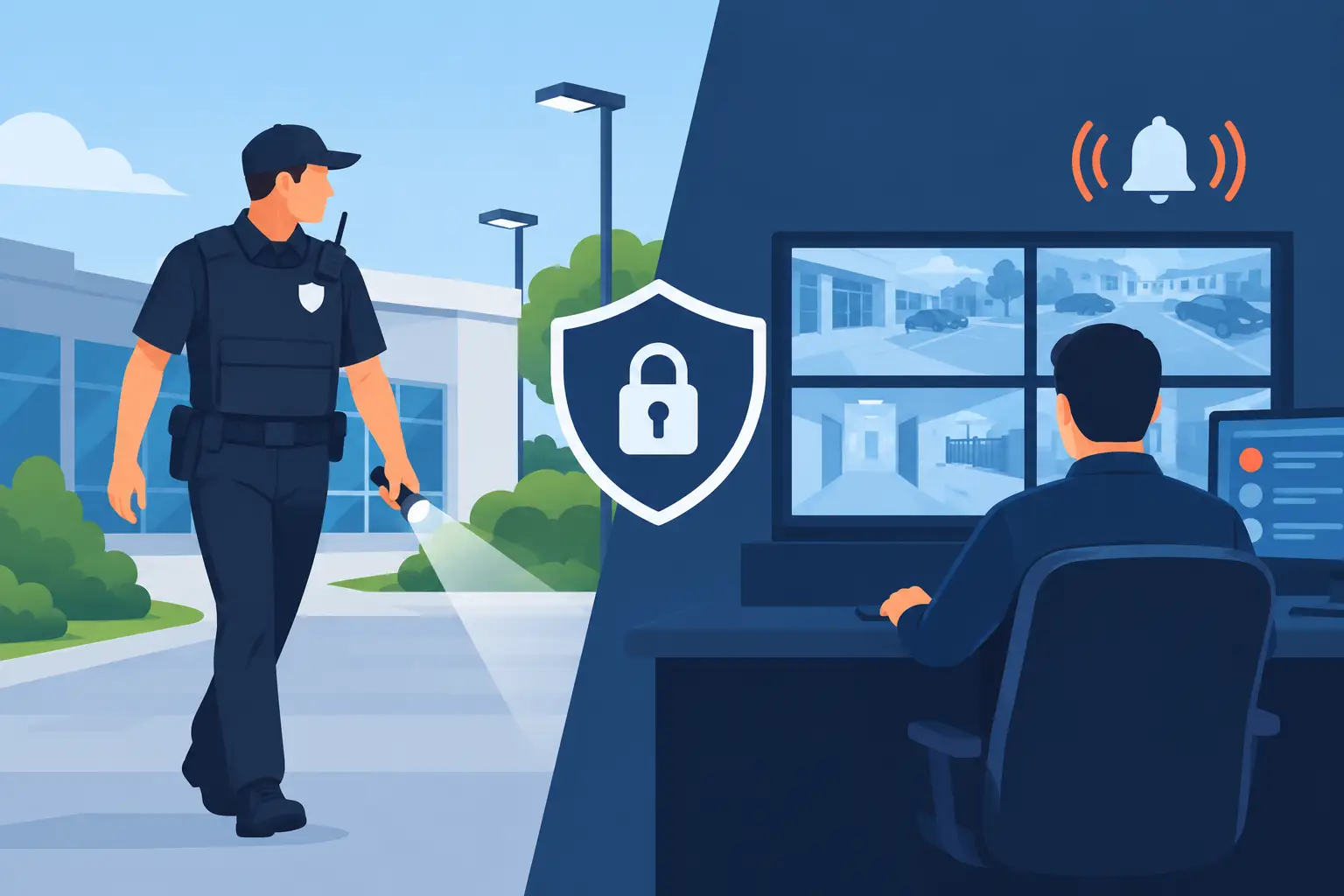
A static guard is assigned to a specific location for a scheduled shift. That position may be a lobby desk, vehicle gate, construction entrance, loading dock, hospital access point, corporate reception area, or secure facility perimeter. The officer remains accountable for that post and its immediate surroundings.
Mobile patrol officers move between designated locations or conduct randomized checks within a defined service area. They may inspect doors and gates, verify alarm conditions, check vacant buildings, patrol parking areas, document hazards, respond to calls, and provide an obvious security presence at varying times. Patrols can occur on a recurring schedule, at random intervals, or in response to an incident.
Neither option is automatically better. Static coverage provides continuity at a critical location. Mobile patrol provides reach across a broader footprint. The operational requirement should determine the assignment, not a one-size-fits-all security package.
When Static Guards Are the Better Fit
Static guards are most effective when a site needs continuous control at a predictable point of risk. If every visitor, employee, contractor, delivery driver, or vehicle must pass through one entrance, a trained officer at that entrance can establish order before an issue moves deeper into the facility.
This model is often appropriate for offices with controlled access, healthcare settings, financial institutions, schools, warehouses with active shipping and receiving, high-traffic retail locations, and events with a defined entry point. A static officer can verify credentials, manage visitor logs, enforce access procedures, observe behavior, provide directions, and contact management or emergency services when conditions warrant.
The value is not limited to deterrence. A fixed officer develops familiarity with the site, the staff, the daily flow of activity, and the people who belong there. That familiarity makes anomalies easier to spot. A person attempting to enter a restricted area, a delivery that does not match the schedule, or a visitor who appears to be testing procedures can be addressed early.
Static coverage also gives employees and guests a clear point of contact. During a medical issue, workplace dispute, evacuation, or suspicious activity report, people know where to find security. For sites with regular public interaction, that accessibility can support a safer and more professional environment.
The trade-off is coverage area. One officer positioned at a front desk cannot simultaneously inspect a distant parking lot, walk a rear perimeter, or respond immediately to activity several buildings away. Assigning static guards across every vulnerable point can also increase the cost of coverage, particularly for 24/7 operations.
Static Guard Assignments Work Best When
Static coverage is usually the right choice when the primary concern is access control, ongoing observation, guest management, or a critical post that cannot be left unattended. It is also appropriate when the site has a consistent volume of people and activity that requires direct, human oversight throughout the shift.
When Mobile Patrol Is the Better Fit
Mobile patrol is designed for properties where risk is spread across time or distance rather than concentrated at one doorway. A patrol officer can cover multiple buildings, large parking areas, vacant units, storage yards, construction sites, gated communities, and commercial properties during periods when a full-time on-site officer is not necessary.
For example, a property with no overnight staff may need door and perimeter checks several times each night. A mobile patrol officer can verify that access points are secure, identify signs of forced entry or vandalism, check for unauthorized vehicles, and document conditions. That visible, unpredictable presence can discourage opportunistic crime because potential offenders cannot easily determine when the site will be checked.
Patrol services are also useful for opening and closing procedures. An officer can help secure a facility at the end of the business day, perform a safety check before employees arrive, escort staff when necessary, and respond to alarm activations under established protocols. For multi-location organizations, this model can provide consistency without staffing every location around the clock.
The limitation is equally clear: a mobile patrol officer is not continuously stationed at every site. Response time depends on the patrol route, geographic distance, traffic conditions, and the nature of the call. A patrol program must therefore be planned around realistic response expectations, not assumptions.
A dependable provider will define patrol frequency, inspection points, escalation procedures, reporting requirements, and after-hours contacts before service begins. Clear post orders matter. Without them, mobile patrol can become a series of routine drive-bys rather than a meaningful layer of risk management.
Comparing Cost, Coverage, and Response
Cost is often the first factor decision-makers consider, but it should not be the only one. Static guards generally require a dedicated officer for the full scheduled shift. That provides immediate on-site response and sustained oversight, but it is a larger commitment than periodic patrol visits.
Mobile patrol is often more cost-efficient for locations that need verified checks and response coverage rather than constant staffing. It can be particularly effective for low-occupancy sites, after-hours operations, and properties with several locations in close proximity. However, lower cost should not be confused with identical coverage. A patrol visit cannot replace a fixed officer where access control must be maintained every minute.
Response expectations should be evaluated with the same discipline. If an incident at a particular area needs immediate intervention, that area may require a static guard, even if patrols cover the rest of the site. If the main concern is deterring trespass, verifying property security, and responding to occasional issues, mobile patrol may be sufficient.
Liability is another consideration. Security officers can document observations, enforce site procedures within their authority, preserve evidence, and provide an organized response during an incident. The correct deployment helps demonstrate that the organization took reasonable, planned steps to address known risks. That is especially relevant for property managers, employers, event organizers, and facilities responsible for public access.
A Combined Security Model Often Delivers Better Results
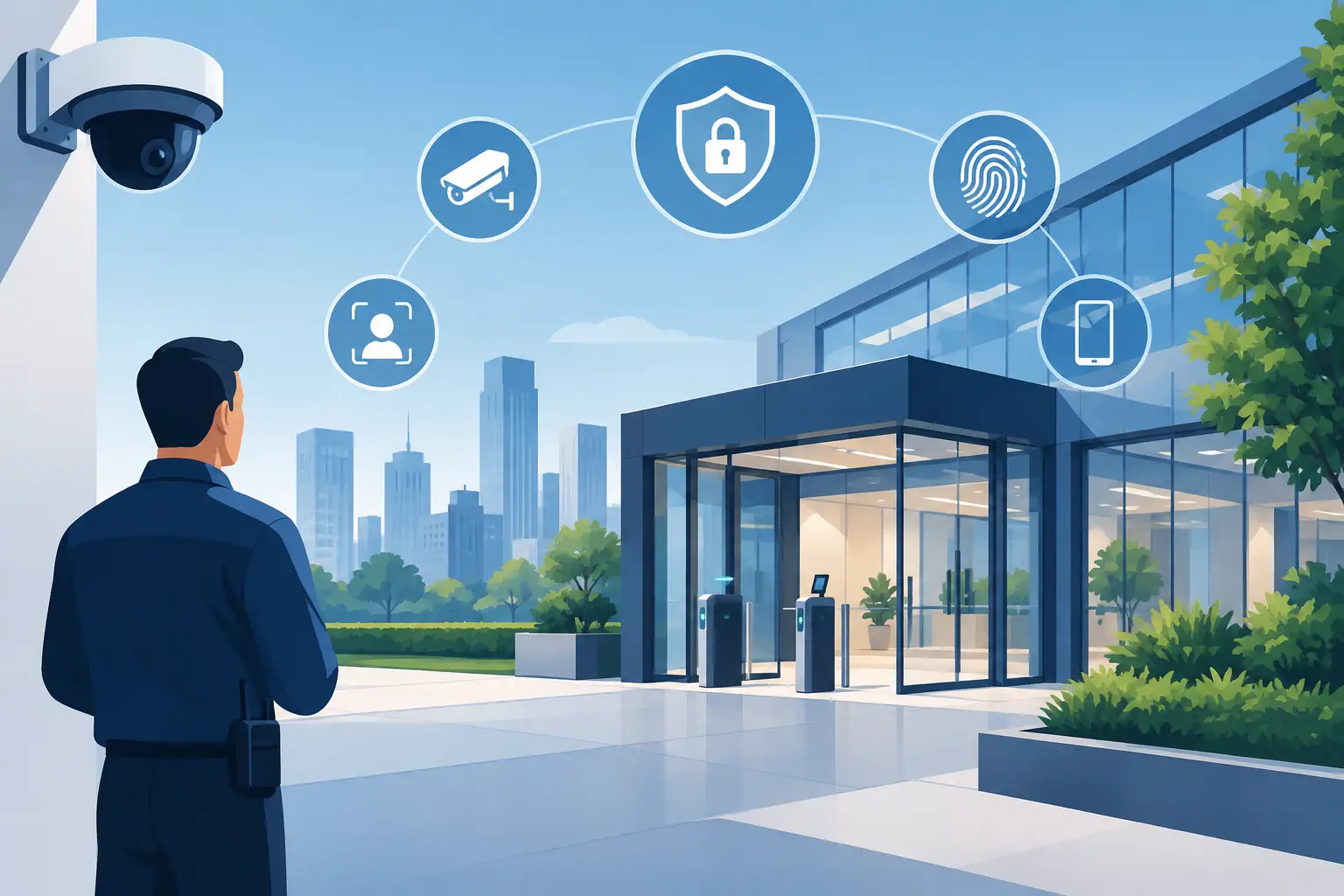
Many sites do not need to choose one service exclusively. A combined approach can protect the highest-risk point with a static officer while extending coverage through mobile patrol.
Consider a manufacturing facility with a staffed vehicle gate during production hours. A static guard can verify drivers, manage access, and monitor arrivals. After operations close, mobile patrol can inspect the perimeter, loading areas, employee parking, and secondary doors. The result is continuous security planning without paying for fixed posts at every location all night.
The same model works for retail centers, corporate campuses, residential communities, and large events. A static officer may manage the main entrance or command post, while patrol officers circulate through parking areas, restricted zones, and less visible sections of the property. Mobility supports early detection. Fixed coverage protects the post that cannot be left open.
This approach requires coordination. Officers need clear communication procedures, defined responsibilities, reliable reporting, and a shared understanding of when to escalate an incident. A security plan should account for local law enforcement coordination, emergency contacts, lighting conditions, camera coverage, access points, and the normal rhythm of the operation.
How to Choose the Right Coverage for Your Site
Begin with an honest assessment of where incidents are most likely to occur and what the consequences would be. Review prior theft, vandalism, trespassing, workplace conflict, unauthorized access, alarm activity, and safety concerns. Then identify whether those risks are tied to a specific location, a particular time of day, or a broad geographic area.
A site with one essential entry point and frequent visitor traffic will usually benefit from a static officer. A vacant property with several doors, detached buildings, and intermittent after-hours risk may be better served by mobile patrol. A busy campus with both needs may require a layered program.
Ask prospective security providers how they develop post orders, verify officer activity, document patrols, handle incidents, and communicate with management. The quality of the operational plan matters as much as the service label. Officers should understand your business rules, know who to contact, and protect the property without interfering with normal operations.
Springfield Private Security approaches coverage as a business-aligned protection plan, not a generic staffing decision. Whether the need is a visible officer at a critical post, patrol coverage across multiple properties, or both, the objective is the same: reduce risk while keeping people, property, and operations moving.
The best security presence is the one your team can rely on before a problem becomes an emergency. Start with the places and times where your operation is most exposed, then build coverage that is visible, responsive, and appropriate to the real risk.