
A broken side gate, an employee propping open a secured door, or a delivery driver entering an unmonitored loading area can create more exposure than a dramatic threat ever will. A business security risk management guide starts with that reality: effective protection is built around the everyday conditions that can put people, property, and operations at risk.
For owners, property managers, and operations leaders, the goal is not to turn a workplace into a fortress. It is to understand where disruption can occur, apply the right level of control, and ensure the organization can respond quickly when something goes wrong. The strongest plans support the work being done on site rather than creating friction for employees, customers, tenants, or guests.
Start With the Business, Not the Security Product
Security decisions should begin with the organization’s operating needs. A distribution facility handling high-value inventory has different exposures than a medical office, financial institution, construction site, retail center, school, or corporate campus. The hours of operation, number of access points, visitor volume, cash handling practices, local crime patterns, and previous incidents all affect the appropriate security posture.
Before selecting guards, cameras, patrols, or access controls, document what must be protected. That usually includes people, physical assets, sensitive information, reputation, and the ability to continue operating during an incident. A risk that causes only minor property damage at one site may create a major business interruption at another.
This step also clarifies trade-offs. Visible officers may deter trespassing and theft, but an overly aggressive presence can be a poor fit for a hospitality setting or a customer-facing office. Remote camera monitoring can extend coverage, but it may not replace a trained officer where immediate on-site intervention is required. The right solution depends on the consequence of failure, not simply the size of the facility.
Conduct a Business Security Risk Assessment
A practical risk assessment identifies vulnerabilities before they become incidents. It should examine the physical environment, daily routines, personnel practices, emergency readiness, and outside threats affecting the location.
Walk the property at different times of day. Conditions that appear controlled at 10 a.m. may look very different after dark, during shift changes, or when a facility is closing. Review parking areas, exterior lighting, fences, doors, windows, roof access, loading docks, storage areas, alarm panels, key control, visitor check-in, and employee-only spaces.
Ask direct operational questions. Who has access after hours? Are contractors verified and escorted when needed? Does staff know how to report suspicious activity? Are access credentials recovered promptly when an employee leaves? How long would it take to contact a decision-maker during an emergency?
A useful assessment also reviews incident history. Look beyond major crimes. Repeated loitering, unauthorized entry attempts, vandalism, employee conflicts, package theft, and alarm activations may reveal patterns that deserve attention. Small events often provide the earliest warning that controls are weak or inconsistent.
Rate Risks by Likelihood and Impact
Not every concern needs the same response. Rate each risk based on how likely it is to occur and how severely it could affect people, property, liability, and operations. This helps leadership focus resources where they will have the greatest effect.
For example, a rarely used rear entrance with poor lighting may present a moderate likelihood of unauthorized access but a high impact if it leads directly to sensitive inventory or occupied work areas. Improving lighting, repairing the door hardware, changing access permissions, and adding patrol checks may be more urgent than replacing equipment in a low-risk administrative area.
Document the findings, responsible party, target completion date, and follow-up date. A risk assessment without assigned ownership becomes a file rather than a working security plan.
Build Controls in Layers
A dependable security program does not rely on one measure. It uses layered controls so that if one safeguard fails, another can detect, delay, or respond to the problem. Physical security, trained personnel, technology, procedures, and communication should work together.
The first layer is often environmental. Clear sightlines, functional lighting, maintained fencing, locked gates, visible address markings, and controlled landscaping can reduce opportunities for concealment and unauthorized access. These measures are often cost-effective, but they require regular inspection. A camera does little good if vegetation blocks its view, and a gate offers little protection if it is routinely left open.
The next layer is access management. Limit access to the areas and times required for each role. Use a clear visitor process, maintain key and credential records, and establish procedures for vendors, delivery drivers, temporary workers, and terminated employees. Access control is not only about hardware. It is also about consistent enforcement by people who understand why the rules exist.
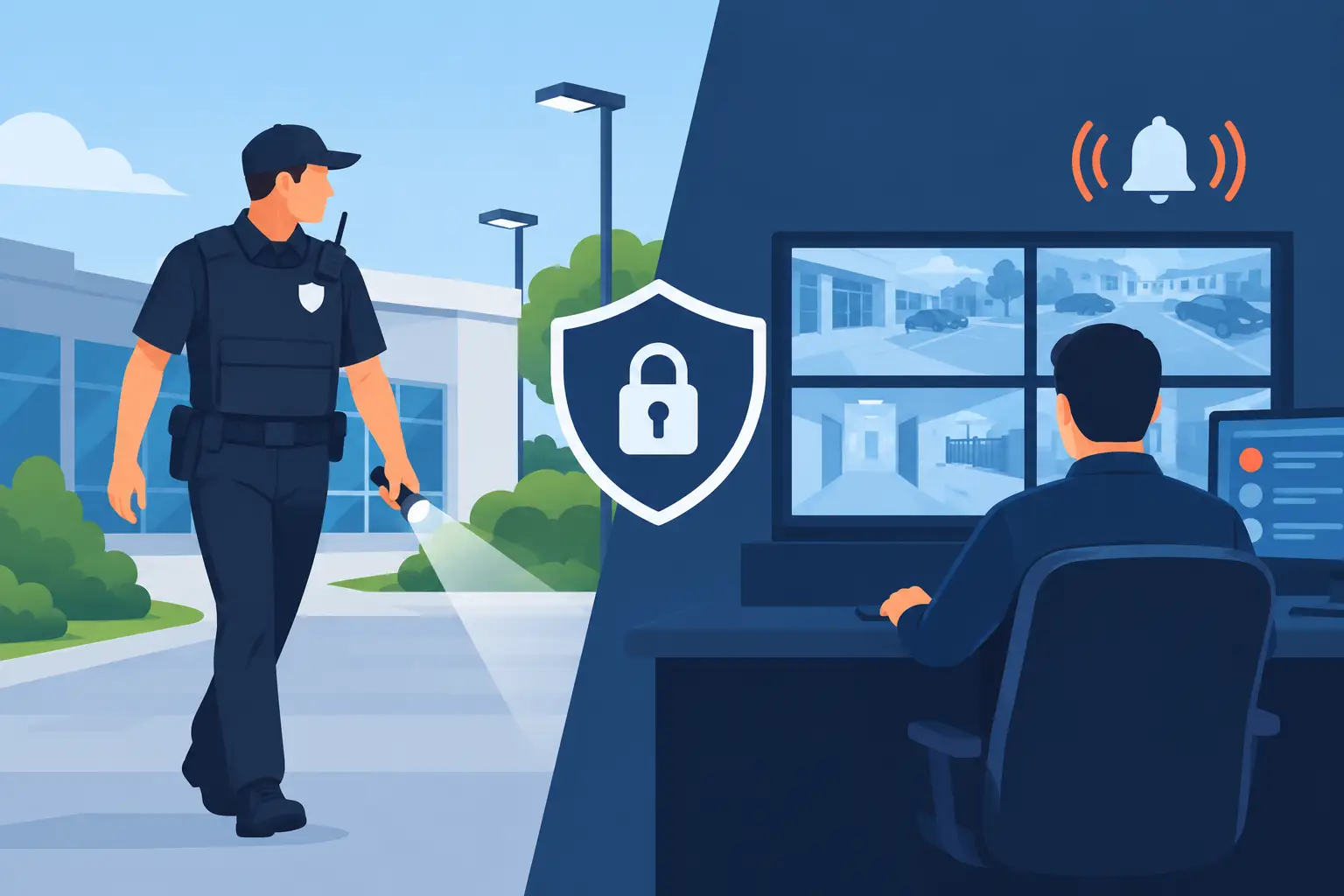
Trained security officers and mobile patrols add judgment to the plan. An officer can verify conditions, de-escalate confrontations, enforce site policies, assist employees and visitors, preserve incident details, and coordinate with emergency services. Mobile patrol may be appropriate for lower-traffic properties, vacant buildings, construction sites, or multi-site portfolios where periodic visible checks provide meaningful deterrence. Fixed on-site coverage is generally better when a property needs continuous access control, immediate response, or a consistent security presence.
Put Incident Response in Writing
Most organizations have a general emergency policy. Fewer have clear, site-specific instructions that employees can follow under pressure. A response plan should address the events most likely to affect the operation, including medical emergencies, fire alarms, active threats, workplace violence, theft, suspicious persons, severe weather, utility failures, and civil disturbances.
For each scenario, define who takes immediate action, who contacts emergency services, who notifies leadership, where people should gather or shelter, and how the incident will be documented. The plan should also establish when security personnel are authorized to intervene, observe and report, preserve evidence, or transfer control to law enforcement or fire personnel.
Communication is often the weak point. Confirm that current after-hours contacts are available, that managers know escalation procedures, and that employees understand how to report an emergency without delay. In a multi-tenant building or large campus, coordination with property management, neighboring tenants, and facility teams can prevent confusion during an incident.
Tabletop exercises are a practical way to test the plan. Walk leaders and key staff through a realistic scenario, such as an unauthorized person entering through a loading dock or a violent confrontation in the parking area. The purpose is not to create alarm. It is to identify unclear responsibilities, missing contact information, and delays before a real event exposes them.
Train for Consistency, Not Just Compliance
Security policies fail when they are treated as paperwork. Employees need short, relevant training tied to what they actually encounter: visitor handling, door security, suspicious activity reporting, conflict de-escalation, emergency notifications, and protecting sensitive areas.
Supervisors should receive additional instruction because they often make the first operational decisions during a disruption. They need to know when to call for assistance, how to protect employees without escalating a situation, and how to maintain business continuity once the immediate issue is controlled.
Training should be repeated when conditions change. New locations, revised access systems, staffing changes, construction projects, seasonal events, and prior incidents all warrant a review. The standard is not whether every employee can recite a policy. It is whether the right actions happen quickly and consistently when they matter.
Measure What Is Happening at the Site
Security management improves when leaders can see patterns. Maintain incident reports that capture time, location, involved parties, actions taken, witnesses, evidence, and follow-up requirements. Review reports regularly rather than only after a serious event.
Useful trends may include repeat locations for trespassing, frequent access-control failures, recurring conflicts, response times, false alarms, property damage, or times when staffing is stretched. These details help determine whether a procedure needs revision, a facility condition needs repair, or coverage should be adjusted.
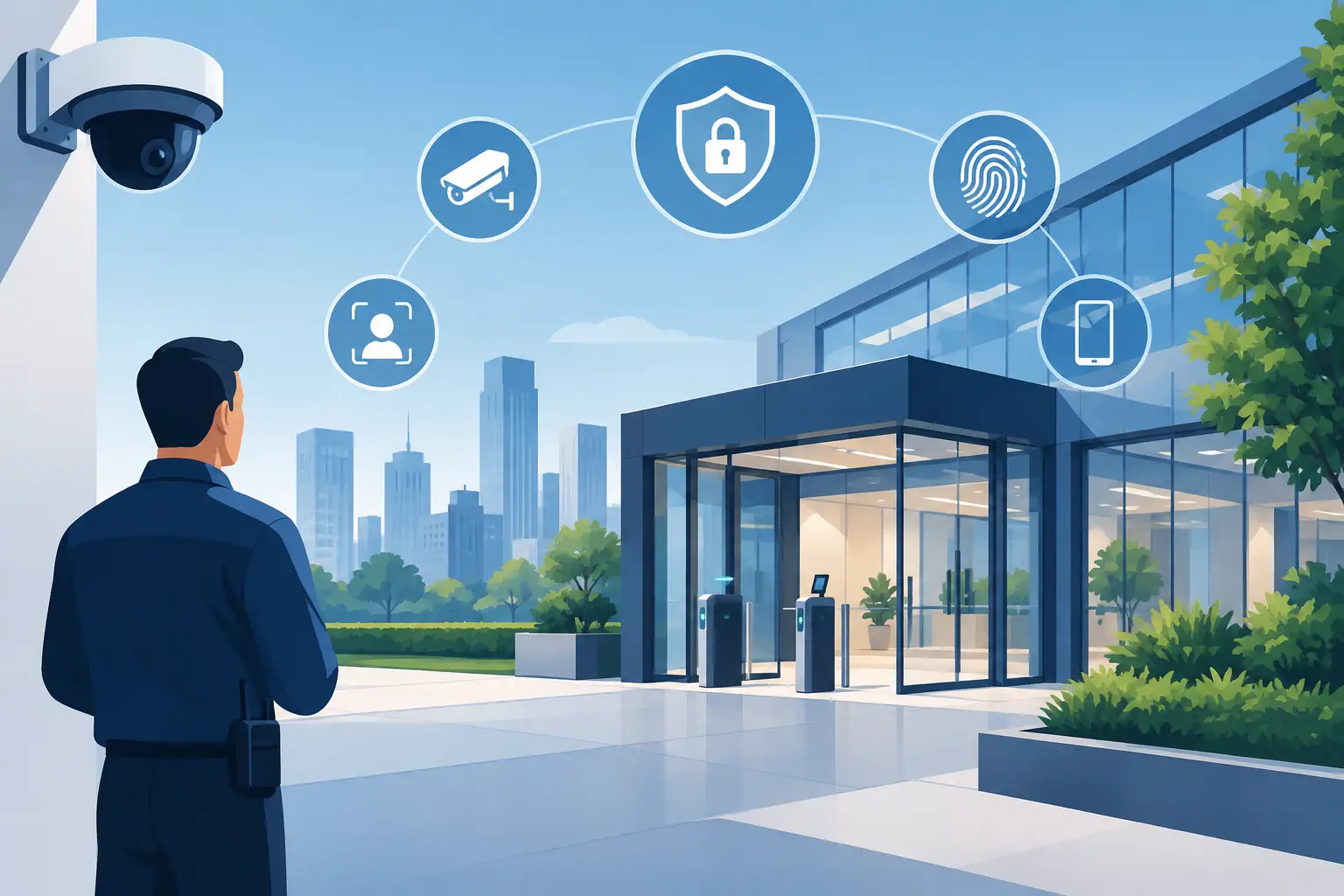
Technology can support this process, but it should serve an operational purpose. Camera systems, alarms, access logs, visitor platforms, and cyber security measures provide valuable information when they are monitored, maintained, and connected to a response process. Installing equipment without accountability creates a false sense of security.
Review the Plan as Operations Change
A business security risk management guide is not a one-time project. Risk changes when a company grows, relocates, adds shifts, opens a new entrance, changes vendors, holds an event, or experiences a new type of incident. California and Nevada businesses also face location-specific considerations, from high-traffic commercial areas to remote facilities and large event environments.
Review the security plan at least annually and after any significant incident. Walk the site again, confirm emergency contacts, test communication procedures, inspect equipment, and ask frontline staff where they see gaps. Their observations are often the fastest way to identify a control that looks adequate on paper but fails in practice.
The best security program is one employees can follow, leaders can measure, and operations can sustain. When protection is planned around the way your business actually works, preparedness becomes part of daily operations rather than a disruption to them.

One Response