A data center can have redundant power, backup cooling, and advanced network defenses, yet still face a serious outage if an unauthorized person reaches a loading dock, equipment room, or network cabinet. Data center security is therefore an operational requirement, not a background function. It protects the people, systems, and controlled environments that customers rely on every hour of every day.
For owners, operators, property managers, and enterprise tenants, the standard is not simply preventing intrusion. Security must support uptime, protect sensitive client assets, maintain a professional environment for authorized visitors, and provide a disciplined response when conditions change. That requires more than cameras and locked doors. It requires a coordinated physical security program built around the facility’s actual risks.
Why Data Center Security Requires a Different Standard
Most commercial properties can tolerate some level of access friction or a short disruption while an incident is sorted out. Data centers often cannot. A brief lapse in access control can expose high-value equipment, sensitive customer information, critical infrastructure, and the continuity commitments made to clients.
The threat picture is also broader than forced entry. Risks can include tailgating through secure doors, impersonation of contractors, theft of components, protests or disturbances near the site, insider misconduct, suspicious deliveries, and attempts to exploit a confused response during an alarm or power event. Cybersecurity is essential, but it does not replace the need to control the physical paths to servers, network hardware, building systems, and personnel.
A strong program accounts for the fact that every facility operates differently. A colocation site with frequent vendor activity needs a more detailed visitor and escort process than a private enterprise facility with a stable employee population. A campus near a public corridor may need a different perimeter strategy than a hardened standalone building. The right plan starts with the site’s mission, layout, traffic patterns, tenant obligations, and risk tolerance.
Build Security From the Perimeter Inward
Effective data center security works in layers. If one measure fails or is bypassed, another should detect, delay, or stop unauthorized activity before it reaches critical assets.
Perimeter and approach routes
Security begins well before the front entrance. Fencing, gates, lighting, signage, surveillance coverage, and vehicle controls establish the first line of deterrence and detection. They should direct legitimate visitors to a defined arrival point while making unauthorized access more difficult and more visible.
The loading dock deserves particular attention. It is often necessary for operations, but it can also become an uncontrolled route into the facility if delivery procedures are inconsistent. Scheduled deliveries, driver identification, inspection protocols, designated waiting areas, and clear handoffs between receiving personnel and security reduce that exposure. If vehicles can enter secured grounds, consider how they are screened, where they stop, and who authorizes their movement.
Entry points and identity verification
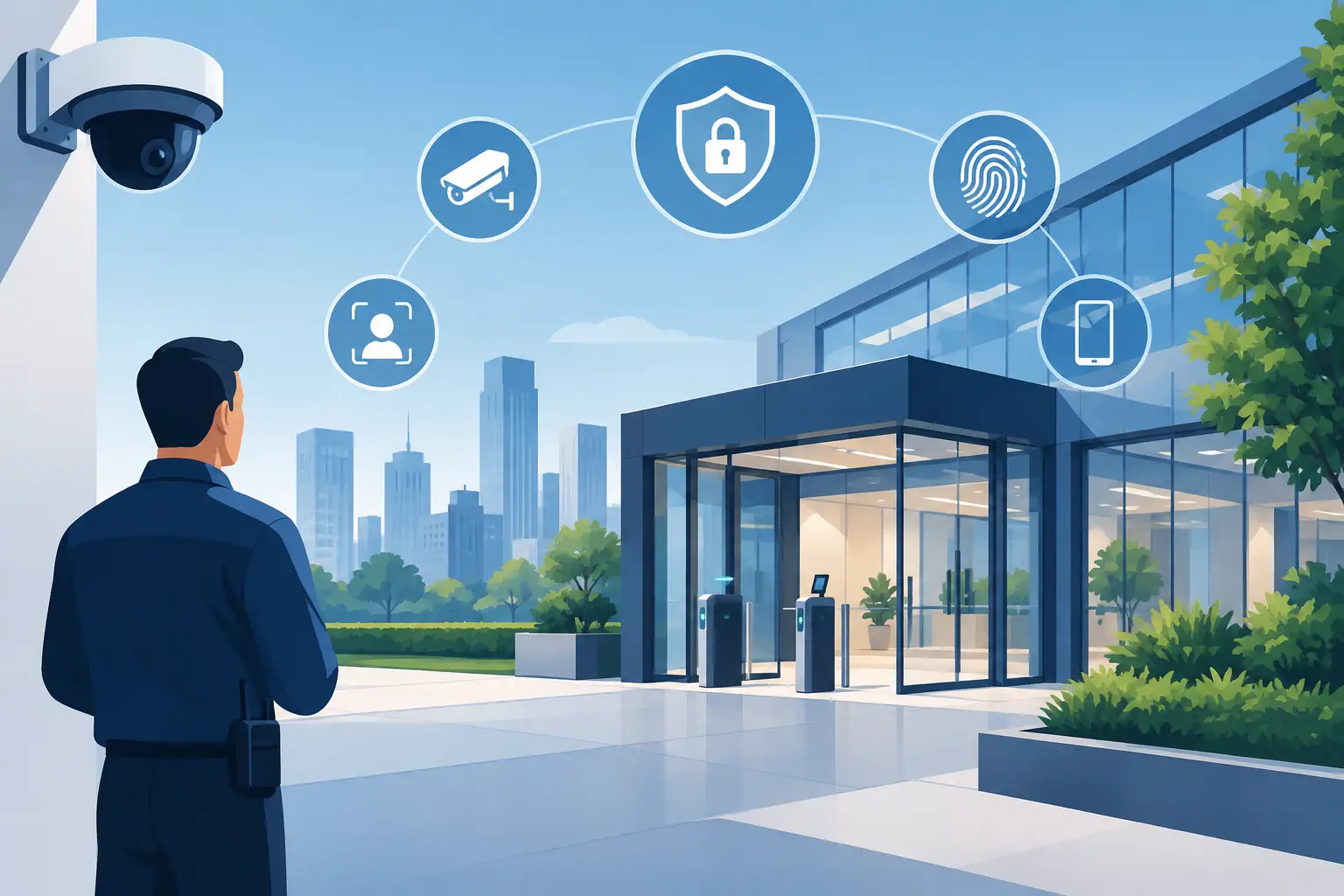
Access control technology is only as effective as the process behind it. Badges, biometric readers, turnstiles, mantraps, and visitor management systems should reflect the sensitivity of the areas they protect. A single card reader may be reasonable for a low-risk office corridor. It is rarely sufficient for a room containing critical infrastructure.
Security officers or trained reception personnel add judgment where technology alone has limits. They can recognize tailgating, challenge an individual whose credentials do not match the visit, verify a work order, or pause entry when a person appears agitated or evasive. Their role should be professional and consistent. Legitimate staff and vendors should understand the process before they arrive, while unauthorized individuals should never be able to use uncertainty or courtesy as a path around it.
Interior zoning and asset protection
Not everyone who is allowed into the building should be allowed everywhere in it. Divide the facility into zones based on operational sensitivity. Public-facing spaces, administrative offices, network operations areas, mechanical rooms, storage spaces, and data halls should have distinct access requirements.
This approach limits the consequences of a lost credential, an escort failure, or an employee entering an area outside their responsibilities. It also creates better records for investigations and audits. Access permissions should be reviewed on a regular schedule and immediately adjusted when an employee changes roles, a contractor completes work, or a tenant relationship ends.
Security Officers Turn Procedures Into Action
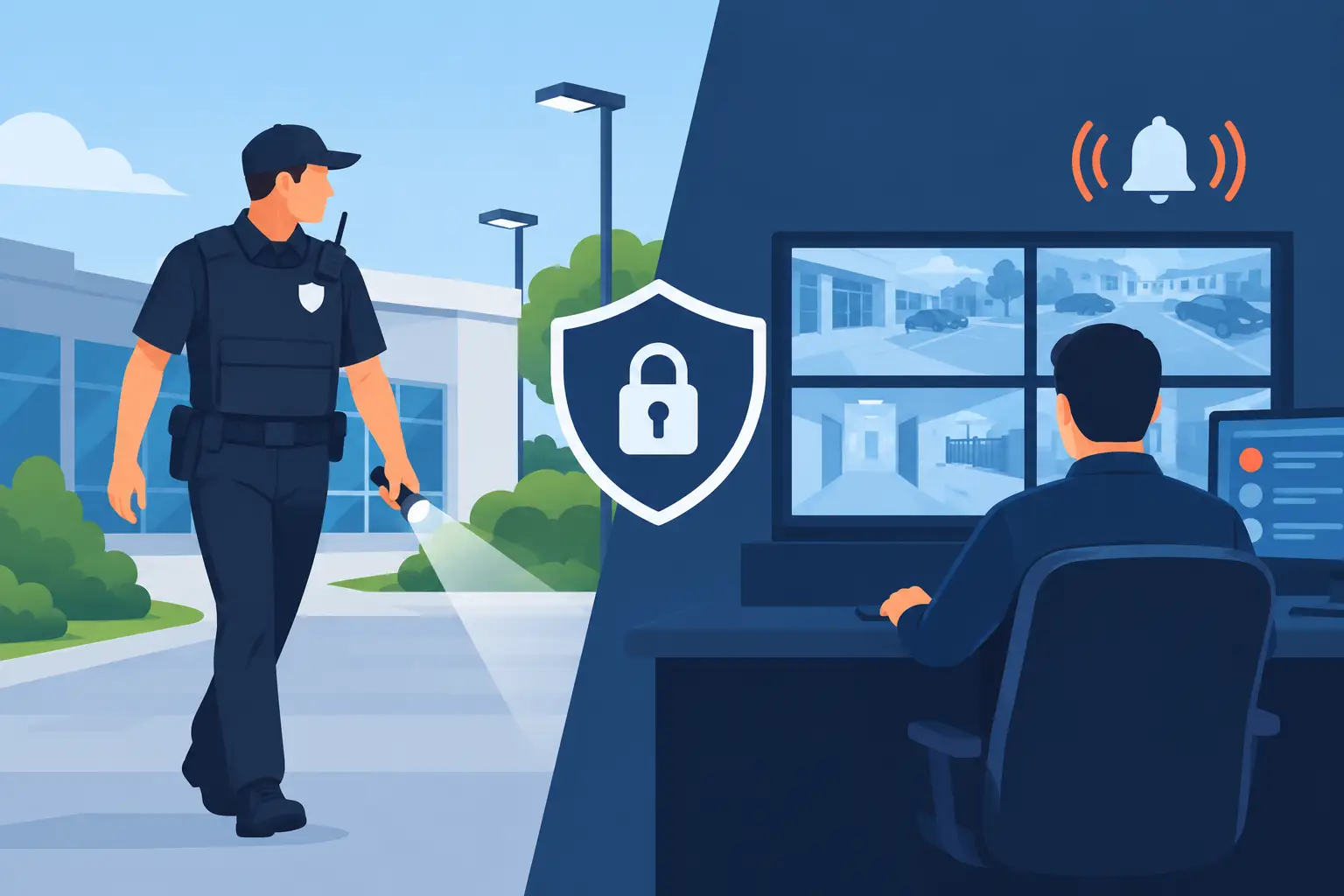
Cameras, alarms, and electronic access logs provide valuable information. They do not independently verify a visitor, escort a contractor, investigate a door alarm, or coordinate an emergency response. Trained on-site officers provide the human presence that connects these systems to real-time action.
For a data center, post orders must be site-specific. Officers need to understand the facility’s access hierarchy, critical rooms, approved vendor procedures, communication channels, alarm priorities, and escalation contacts. Generic instructions such as “monitor cameras” or “patrol the property” do not prepare an officer to respond correctly when a vendor arrives without a confirmed work order or a secured door repeatedly alarms after hours.
The right staffing model depends on the site. A large facility with continuous activity may need a staffed security operations desk and regular interior and exterior patrols around the clock. A smaller unmanned site may benefit from mobile patrol checks, remote monitoring, and rapid-response coverage. In either case, the objective is the same: detect abnormal conditions early, document them clearly, and act before a manageable issue becomes a disruption.
Visible security can also serve as a deterrent, but visibility must be balanced with the facility’s operating environment. Officers should be approachable to authorized staff and visitors, discreet when client confidentiality calls for it, and prepared to become more assertive when a genuine threat emerges. That balance is especially valuable at facilities where executives, technical teams, vendors, and clients share the same access points.
Plan for Incidents Before They Test the Facility
A security plan is incomplete if it only describes normal operations. Data center leaders should know who does what when access control fails, a suspicious package is discovered, a person refuses to leave, a protest forms nearby, or a fire or utility event triggers an evacuation.
Written response protocols should establish notification thresholds, decision authority, communication methods, and documentation standards. They should also clarify the relationship between security personnel, facility operations, IT teams, property management, emergency services, and tenant representatives. During an incident, unclear authority costs time.
Exercises are where gaps become visible. A tabletop review can test escalation and communications. A controlled field exercise can test whether officers can secure entrances, account for contractors, establish a safe perimeter, and preserve access for emergency responders. The goal is not to create disruption for its own sake. It is to identify problems while there is time to correct them.
Incident reporting matters after the immediate issue is resolved. Reports should be objective, timely, and detailed enough to support management decisions, client communication, or follow-up investigation. Trends in door alarms, attempted tailgating, access violations, or suspicious activity can reveal weaknesses that a single event may not expose.
Integrate Physical and Cyber Risk Management
Physical and cybersecurity teams often operate separately, even though their risks overlap. An unsecured network closet, a misplaced visitor badge, or unauthorized access to a console can become a cybersecurity event. Likewise, a cyber incident may require physical restrictions on equipment, personnel access, or vendor activity.
Coordination does not mean every security officer needs to be a cyber specialist. It means physical security procedures should support cyber controls. Access logs should be available when an investigation requires them. Vendor access should be approved and time-limited. Sensitive maintenance activity should have clear authorization. Security and IT leaders should know how to contact one another quickly when an event crosses both domains.
Review the Program as Operations Change
Data center security cannot remain static while the facility evolves. New tenants, construction projects, changing delivery schedules, expanded staffing, and updated equipment layouts can all create access gaps. A program that worked well at commissioning may no longer fit the operation two years later.
Regular assessments should examine post orders, patrol routes, camera coverage, lighting, access permissions, visitor records, incident reports, and response performance. Ask practical questions: Are there blind spots near critical doors? Do officers receive current contractor schedules? Can the team distinguish an expected after-hours visit from an anomaly? Are response contacts accurate after organizational changes?
Springfield Private Security approaches these questions through customized physical risk management, aligning officer coverage, mobile patrol, access procedures, and response planning with the client’s operational requirements. The best security program is not the most intrusive one. It is the one that reliably protects the site without creating unnecessary obstacles for the people responsible for keeping it running.
A well-secured data center gives operations leaders more than a guarded building. It gives them confidence that access is controlled, irregular activity is addressed quickly, and their facility is prepared to protect uptime when normal conditions do not hold.