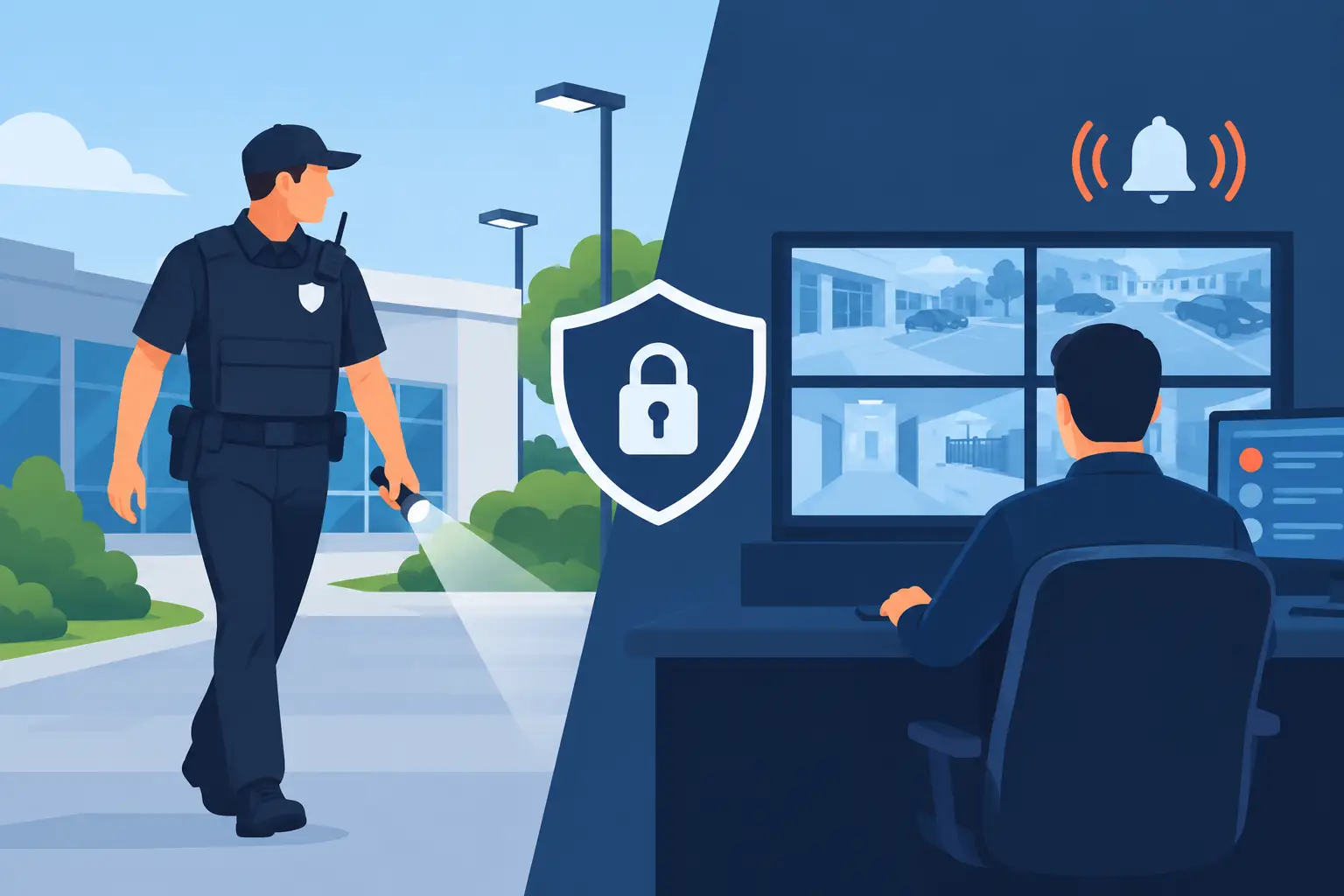
A security officer at your facility represents more than a visible deterrent. That officer may control access, document incidents, interact with employees and visitors, and make decisions during a developing emergency. Guard licensing requirements are therefore a business continuity issue, not just a hiring detail. For California and Nevada organizations, confirming that a security provider and its officers are properly licensed helps reduce avoidable liability while ensuring coverage is ready when it is needed.
The exact requirements depend on the state, the officer’s assignment, and whether the role is armed. A retail post, a construction site, a corporate campus, and a critical infrastructure facility may all require different levels of training, supervision, equipment, and documentation. The right standard is not simply the minimum legal threshold. It is the level of preparation that matches the risks at your operation.
Guard Licensing Requirements: What Clients Should Know
Businesses are not expected to become licensing experts. They are expected to make reasonable decisions when selecting and overseeing vendors. That starts with understanding the distinction between the license held by the security company and the registration, permits, and training held by individual officers.
A contract security company generally needs authorization to operate in the state where it provides services. In California, private patrol operators are regulated through the Bureau of Security and Investigative Services, commonly called BSIS. In Nevada, private security operations and personnel are regulated through the Nevada Private Investigators Licensing Board. Officers working under a provider must also meet the applicable registration and training requirements for their assignments.
For a client, this means a company’s business registration alone is not enough. A provider should be able to clearly explain its operating authority, how it screens and deploys officers, and how it verifies that each officer assigned to your site is eligible for that role.
California officer registration and training
In California, unarmed security officers typically need a BSIS Guard Card before they can perform regulated security duties. The process includes required training and a background review. State-required instruction includes the powers to arrest and weapons of mass destruction or terrorism awareness courses, along with additional continuing training completed on the state’s required timeline.
These baseline courses matter because they establish a common foundation. They address subjects such as the limits of a security officer’s authority, observation and reporting, public interaction, emergency response, and legal responsibilities. But baseline training does not automatically prepare an officer for every property or threat environment.
A distribution center may need officers who understand vehicle gates, trailer seals, after-hours deliveries, and alarm response. A medical facility may require a more refined approach to de-escalation and privacy. An event venue needs staff who can manage entry flow, prohibited items, crowd behavior, and rapid coordination with event leadership. Site-specific training closes the gap between a valid Guard Card and effective performance.
Armed assignments require additional permits
An armed post carries a higher level of responsibility. In California, an officer who carries an exposed firearm while working security must hold the appropriate BSIS firearms permit and complete the required training and qualification process. The officer must remain current with required qualifications and comply with the conditions of the permit.
Nevada also requires additional authorization and firearms training for armed security work. Requirements can vary based on the assignment, the weapon carried, and board rules in effect at the time. A responsible provider should verify armed credentials before every deployment and maintain records that show qualifications are current.
Armed security is not automatically the best answer to a security concern. It can be appropriate for banks, high-value assets, executive protection, critical infrastructure, or locations with a documented threat profile. It also requires clear post orders, escalation protocols, supervisory oversight, and coordination with the client’s leadership team. For many commercial properties, a well-trained unarmed officer, supported by mobile patrols and a sound access-control plan, delivers the right balance of deterrence and customer experience.
Licensing Is Only the Starting Point
A licensed officer can still be a poor fit for your property if the provider does not manage assignments professionally. Licensing confirms a basic legal qualification. It does not, by itself, confirm punctuality, report quality, communication ability, judgment, or familiarity with your procedures.
Before an officer begins work, the provider should understand your operating hours, access points, visitor policies, staff concerns, emergency contacts, alarm procedures, and escalation expectations. That preparation is especially important for sites that operate overnight, receive the public, store sensitive inventory, or have multiple tenants.
Post orders should be specific enough to guide decisions without creating unnecessary friction. An officer assigned to a corporate lobby should know who may authorize visitor access, how deliveries are handled, when to contact building management, and what to do if a person refuses to leave. An officer at a construction site should know which gates must be checked, how to document damage or trespass activity, and when to request law enforcement support.
The goal is security that supports the operation rather than disrupting it. Proper licensing protects the legal foundation. Thoughtful post planning protects day-to-day performance.
What to Verify Before Hiring a Security Provider
When evaluating a security company, ask direct questions and expect direct answers. A dependable provider should not treat credential verification as proprietary information or an inconvenience. It is part of professional accountability.
Request confirmation of these four areas:
- The company’s current authority to provide private security services in the state where your site operates.
- Each assigned officer’s current registration or work card status, along with role-specific training records.
- Current armed officer permits and firearms qualifications when the assignment includes armed coverage.
- Insurance coverage, supervisory procedures, incident reporting standards, and after-hours escalation protocols.
It is also reasonable to ask how the provider handles expired credentials, call-offs, and emergency replacements. A security plan can fail quickly if a vendor has no reliable process for confirming eligibility before placing an officer on post.
For organizations with locations in both California and Nevada, avoid assuming that credentials transfer automatically. The states have separate regulators and separate processes. An officer qualified in one state may need additional registration, training, or approval before working in the other. Multi-state coverage should be managed through a documented compliance process, not assumptions made during a staffing shortage.
Matching the Assignment to the Risk
The best security program begins with a practical assessment of what can interrupt your operations. That may be theft, trespass, workplace conflict, unauthorized access, vandalism, protest activity, after-hours intrusion, or a concern tied to a particular event.
From there, determine what the officer needs to do. Is the assignment primarily a visible presence? Does it require access control, patrol documentation, camera monitoring, visitor management, vehicle inspections, or emergency coordination? Does the officer need specialized experience with executive protection, financial institutions, industrial facilities, or crowd management?
These questions shape the appropriate staffing model. They also reveal why choosing a provider based only on hourly price can create exposure. Lower-cost coverage may look comparable on a proposal, yet differ materially in supervision, training, reporting, officer retention, and response capability.
Springfield Private Security approaches this work as an operational responsibility. The objective is to place qualified personnel into a clear plan that protects people, property, and business activity without creating unnecessary disruption. That includes matching the officer’s credentials and experience to the realities of the site, then maintaining responsive oversight after the assignment begins.
Keep Compliance Active, Not Filed Away
Licensing and permit status should be monitored throughout the contract, particularly for armed assignments and long-term posts. Regulations, renewal dates, training requirements, and client risks can change. A provider that reviews credentials only at onboarding leaves room for preventable failures later.
Clients should also review incident reports and meet periodically with their security partner to identify patterns. Repeated access-control issues, suspicious activity, employee concerns, or gaps in patrol coverage may call for updated post orders, added training, or a different deployment model. Compliance supports that conversation, but it should never replace it.
A properly licensed officer is the starting line for dependable security coverage. The stronger result comes from pairing verified credentials with disciplined training, site-specific direction, and a provider that treats your operation as a mission worth protecting.