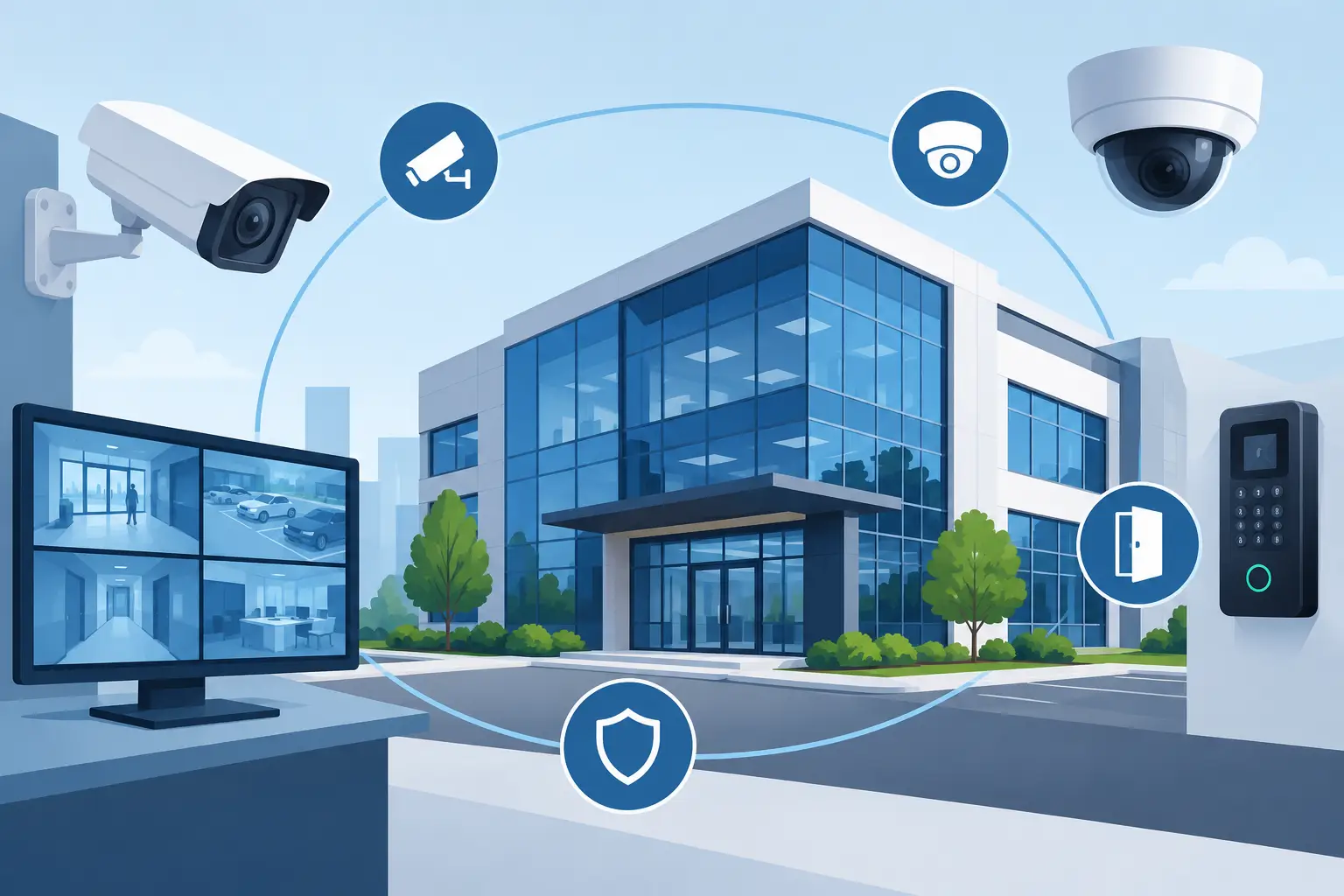
A commercial building security planning guide should begin where real incidents begin: at an unlocked side door, an unverified visitor, a poorly lit parking area, or a team member unsure who to call. Effective security is not just a visible officer or a camera system. It is a coordinated plan that protects people, property, and business continuity while allowing tenants, employees, customers, and vendors to move through the facility without unnecessary friction.
For property managers, operations leaders, and business owners, the goal is not to turn a commercial site into a fortress. The goal is to identify where risk can enter the operation, establish practical controls, and make sure the right response is ready when conditions change.
Start Your Commercial Building Security Planning Guide With Risk
Every building has a different risk profile. A corporate office with controlled daytime access faces different concerns than a medical facility, warehouse, financial institution, retail center, construction site, or multi-tenant commercial property. Planning should reflect the facility’s purpose, hours, occupancy, surrounding area, assets, and history of incidents.
Begin with a documented walk-through of the entire property. Review exterior boundaries, parking lots, pedestrian entrances, receiving areas, loading docks, stairwells, elevators, common areas, mechanical rooms, roof access, and all points where people or deliveries enter the building. A controlled main entrance does little good if a rear service door is routinely propped open.
During the assessment, look beyond obvious theft or trespassing concerns. Consider workplace violence, vandalism, unauthorized access to sensitive information, disruptive visitors, package theft, after-hours occupancy, fire and life-safety coordination, and emergency evacuation. For multi-tenant properties, clarify where landlord responsibility ends and tenant responsibility begins. Security gaps often appear in those handoffs.
A useful risk assessment evaluates four questions: what needs protection, who may create or encounter a threat, how an incident could occur, and what the operational impact would be. This process helps leadership prioritize spending. A high-value server room, an isolated employee parking area, and a lobby receiving hundreds of visitors each day should not receive the same controls simply because they are located in the same building.
Build Security in Layers, Not as a Single Solution
Reliable commercial security uses overlapping measures. If one control fails, another should help detect, delay, or respond to the issue. The right mix depends on the site, but the plan generally combines physical measures, technology, trained personnel, and consistent operating procedures.
Control Access Without Slowing the Business
Access control is the foundation of most commercial building security plans. Establish who can enter, where they can go, and when their access should end. Employee badges, visitor sign-in procedures, escorted access rules, contractor credentials, delivery protocols, and key-control records all serve this purpose.
The strongest process is usually the simplest one employees can follow every day. If staff must bypass a complicated visitor procedure to keep the lobby moving, the procedure will fail under pressure. For a busy office, that may mean a staffed reception point and pre-registered visitors. For a warehouse, it may mean separating employee, truck, and vendor traffic before those groups reach operations areas.
Access should also be reviewed when employees change roles, contractors complete work, tenants move out, or keys are reported missing. Old credentials and unaccounted-for keys create avoidable exposure.
Use Security Officers Where Judgment Matters
Technology can record an event, but it cannot always prevent escalation, provide immediate assistance, or make a professional decision in a changing situation. On-site armed or unarmed officers, mobile patrols, and rapid-response coverage are especially valuable where there is frequent public interaction, high-value property, after-hours activity, or a known history of incidents.
Officer assignments should be based on defined duties, not a vague request for a visible presence. A post order should address patrol routes, access checks, visitor management, incident reporting, alarm response, parking enforcement, emergency contacts, and escalation procedures. The officer also needs a clear understanding of the client environment. A security presence that interferes with tenants or customers can undermine the very operation it is meant to protect.
Springfield Private Security approaches coverage as an extension of the client’s operation, with duties tailored to the site’s risks, culture, and business hours.
Make Technology Support the Plan
Cameras, intrusion alarms, access-control systems, intercoms, lighting, and communication tools can improve coverage significantly. They are most effective when someone owns the process behind them. That includes checking camera views, maintaining retention settings, testing alarms, correcting blind spots, reviewing access reports, and verifying that emergency contacts are current.
Avoid purchasing technology solely because it offers more features. A smaller, well-maintained camera system covering entrances, cash-handling areas, loading zones, and parking approaches may be more useful than a larger system that no one monitors or reviews. Privacy expectations, data retention requirements, and local regulations should also be considered before expanding surveillance.
Prepare the Building for Incidents Before They Happen
A security plan is only as dependable as the people expected to carry it out. Employees, reception personnel, maintenance teams, property managers, and security officers should know what to do when they encounter a suspicious person, aggressive visitor, medical emergency, fire alarm, break-in, or threat report.
Keep response instructions clear and role-specific. Employees need to know who to contact and when to call 911. Security personnel need authority boundaries, communication protocols, and reporting requirements. Management needs an escalation path for notifying tenants, executives, legal counsel, insurers, and affected stakeholders when appropriate.
Written procedures should address both routine and high-consequence events. For example, a package delivery issue may be handled at reception, while an unattended package in a restricted area may require a different response. A workplace violence concern may call for discreet reporting, coordination with management, and a measured security presence. The right response depends on the credibility and immediacy of the threat.
Conduct practical drills, but do not treat them as paperwork exercises. Test how quickly the right people receive information, whether emergency contacts work after hours, whether officers can access necessary areas, and whether employees understand assembly locations. After each drill or actual incident, document what worked, what caused delays, and what needs to change.
Protect the Perimeter and the Hours Between Shifts
Many commercial incidents occur when a building is less occupied, not when the lobby is full. After-hours planning should address exterior lighting, gate controls, patrol frequency, alarm response, vacant suites, contractor activity, and parking-area visibility.
Mobile patrol can be a practical option for properties that do not require a full-time officer. Randomized exterior and interior checks can discourage trespassing, identify unsecured doors, and provide documented site activity. However, patrol is not a replacement for continuous coverage when a facility has constant public traffic, sensitive assets, or an elevated threat level. Coverage should match the risk, not simply the budget category.
Also consider the transition periods: opening, closing, shift changes, deliveries, and special events. These are moments when doors are open longer, employees may be distracted, and normal access patterns are less predictable.
Review the Plan as Operations Change
Security planning is not a one-time project. Renovations, new tenants, layoffs, expanded hours, leadership changes, recurring incidents, and changes in the surrounding area can all alter a building’s exposure. Review the plan at least annually and after any significant incident or operational change.
Use incident reports as decision tools. Repeated door alarms, parking complaints, visitor conflicts, or trespassing calls may point to a larger pattern that requires a change in lighting, patrol schedule, access policy, staffing, or tenant communication. Small adjustments made early can prevent a larger disruption later.
The best commercial security plan is one your people can execute on an ordinary Tuesday and rely on during an extraordinary event. When protection is aligned with the way the building actually operates, security becomes a source of confidence rather than another obstacle to manage.