A loading dock left open after shift change, an unsecured contractor gate, or a delayed response to an alarm can turn an ordinary workday into an operational disruption. This industrial facility security guide is built for leaders who need to protect people, inventory, equipment, and continuity without slowing production or creating unnecessary friction for employees.
Industrial sites are not protected by a single camera, a locked door, or a uniform at the front gate. Effective protection comes from a coordinated plan that reflects how the facility actually operates: when shipments arrive, where employees enter, how contractors move through the property, which assets are most exposed, and who has authority to respond when something goes wrong.
Start With the Facility’s Real Risk Profile
A security plan should begin with an on-site assessment, not a generic checklist. A distribution center, manufacturing plant, utility-related site, warehouse, and construction materials yard can all have perimeter concerns, but their daily risks are different. The hours of operation, value and portability of inventory, traffic patterns, labor model, neighborhood conditions, and regulatory obligations all affect the right level of coverage.
Walk the property from the perspective of someone looking for an opportunity. Identify blind areas along fencing, unmonitored employee entrances, poorly lit parking areas, unsecured roof access, idle equipment, fuel storage, and locations where visitors can enter without being challenged. Review both the outside perimeter and the paths that lead to high-value or sensitive areas inside.
The goal is not to make every area feel restricted. It is to place controls where they reduce meaningful risk. A facility handling high-value electronics may need tighter receiving and shipping controls than a site storing low-value bulk materials. A location operating around the clock may need active patrol coverage at times when management is off-site. The right approach depends on the exposure and the consequences of an incident.
Control Access Without Disrupting Operations
Access control is the foundation of industrial facility security. If the site cannot reliably determine who is entering, why they are present, and where they are permitted to go, other measures become less effective.
Employee access should match job responsibilities and work schedules. Credentials, badges, keys, gate codes, and digital permissions require clear ownership and periodic review. When an employee changes roles or leaves the organization, access must be adjusted promptly. Delays in removing credentials create avoidable exposure, particularly at large sites with multiple entrances or separate storage areas.
Visitor and contractor procedures deserve equal attention. Drivers, delivery personnel, vendors, maintenance teams, and temporary labor may have legitimate reasons to enter, but they should not move through sensitive areas without verification or direction. A practical process confirms identity, records the purpose of the visit, identifies the host, and sets limits on where the individual may go.
Security officers can support this process by managing gate access, checking credentials, enforcing parking rules, and providing a professional point of contact for employees and visitors. The officer’s role should be defined around the facility’s workflow. At a busy shipping gate, that may mean coordinating driver check-in and maintaining vehicle records. At a manufacturing site, it may mean controlling employee access while remaining prepared to respond to alarms, medical events, or workplace disturbances.
Build Layers Around High-Value Assets
Perimeter fencing and vehicle gates are useful, but they should not be the only barrier between an intruder and valuable property. Industrial facilities benefit from layered protection: perimeter controls, controlled entry points, interior restricted zones, monitored surveillance, and trained personnel who can recognize irregular activity.
Lighting is often one of the most practical improvements. Dark corners near equipment yards, trailers, dumpsters, storage racks, or secondary doors make it harder for employees and patrol personnel to identify a threat. Lighting should support camera coverage and safe movement, not simply brighten the most visible parts of the property.
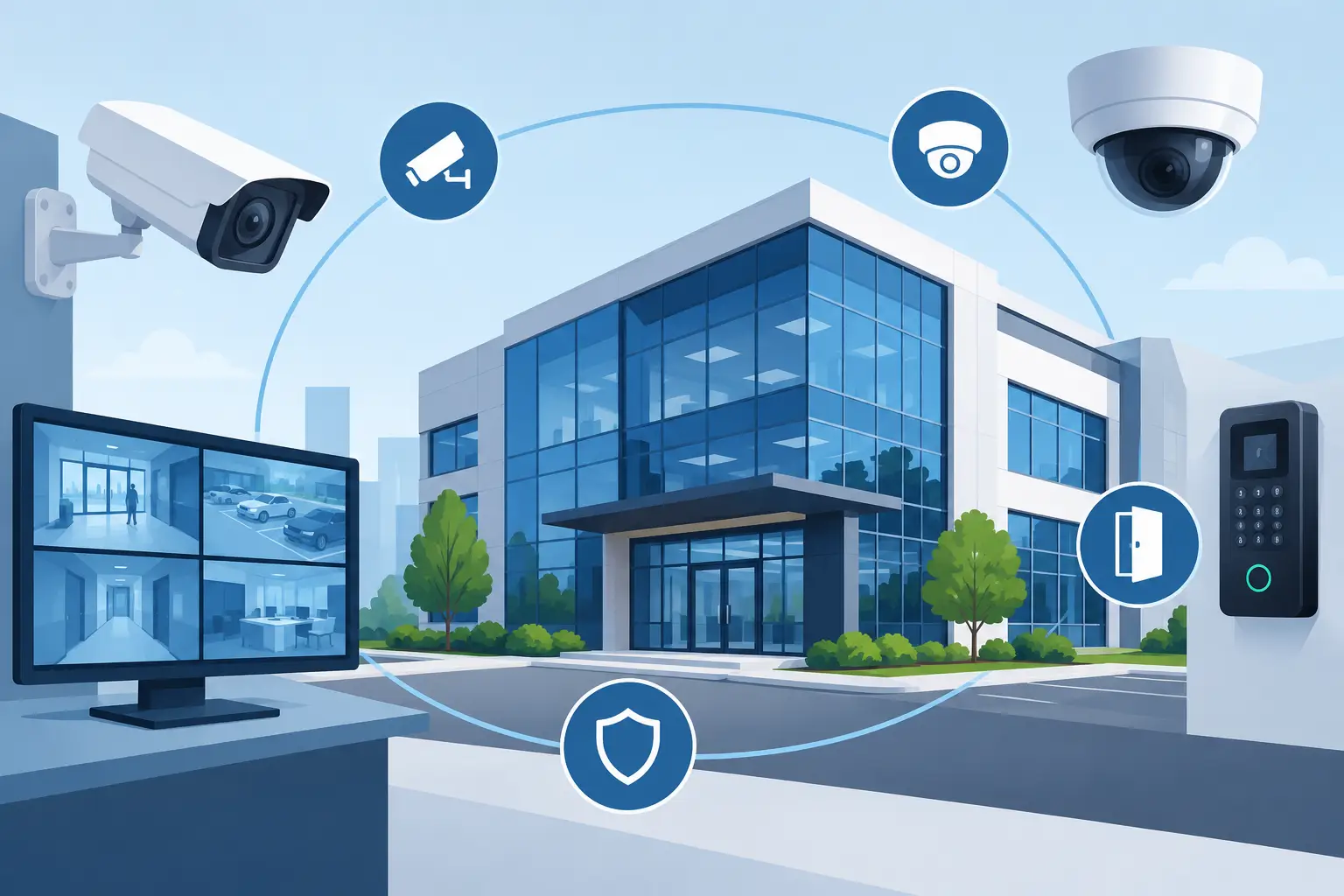
Cameras provide valuable documentation and situational awareness, but they work best when coverage is purposeful. Focus on entry and exit points, loading docks, inventory transfer areas, cash-handling locations, fuel or tool storage, and locations where theft, tampering, or safety violations are likely to occur. Camera placement should account for changing light, obstructions, weather, and the ability to identify a person or vehicle when footage is needed.
For critical equipment, sensitive inventory, or hazardous materials, add internal controls. Locked cages, restricted rooms, key logs, inventory verification, and supervisor authorization can reduce losses that occur inside the perimeter. These measures should be proportionate. Excessive restrictions can delay maintenance and frustrate staff, while weak controls can make theft or sabotage easy to conceal.
Make Security Part of Shift Change and Site Movement
Many facilities are most vulnerable during transition periods. Shift changes create congestion at entry points. Trucks arrive before or after normal office hours. Supervisors may be focused on production issues while employees, visitors, and vehicles move in several directions at once.
A security plan should account for these predictable pressure points. Establish clear procedures for employee arrival, visitor processing, truck staging, gate operation, and after-hours access. If a gate must remain open for a set period, determine who is watching it and what happens when a person or vehicle does not belong there.
Mobile patrols can be especially effective for large campuses, outdoor storage yards, and multi-building operations. A visible, documented patrol changes the risk calculation for trespassers and can identify problems such as damaged fencing, unsecured doors, suspicious vehicles, safety hazards, or unusual activity before they become larger incidents. Patrol routes should vary enough to avoid being predictable while still covering known risk areas consistently.
Prepare Officers and Employees to Recognize Early Warning Signs
Security is stronger when employees understand what to report and believe their concerns will be handled professionally. They do not need to become security specialists. They need a simple reporting path and clear examples of behavior that deserves attention.
Repeated attempts to access a restricted area, unfamiliar people photographing equipment, vehicles waiting near gates, unusual requests for schedules or facility details, threats between employees, and tampering with locks or cameras should be reported promptly. Small indicators are not proof of criminal intent, but they may reveal a pattern when reviewed together.
Security personnel should also understand the facility’s operating realities. An officer who knows which doors should be locked, where contractors normally stage, what equipment is expected to run overnight, and who is authorized to approve access can distinguish routine activity from a genuine concern. This is where site-specific post orders matter. Generic instructions do not prepare an officer to protect a complex industrial environment.
Plan the Response Before an Incident Occurs
A security plan is tested by response, not by appearance. When an alarm sounds, a worker is injured, a theft is discovered, or an unauthorized person enters the property, employees should know who takes control, who contacts law enforcement or emergency services, who preserves evidence, and who communicates with management.
Document escalation procedures for common incidents, including trespassing, theft, workplace violence concerns, fire alarms, medical emergencies, severe weather, utility failures, and suspicious packages. The response should identify decision-makers and alternate contacts for nights, weekends, and holidays. A plan that depends on one unavailable manager is not a reliable plan.
Incident reporting also matters after the immediate event. Reports should capture facts, times, witnesses, actions taken, and any available video or access-control records. Consistent documentation supports insurance claims, internal investigations, employee accountability, and improvements to future procedures. It also gives leadership a clearer view of recurring issues, such as repeated gate violations or theft patterns near a particular dock.
Review the Program as Operations Change
Industrial security cannot remain static when the operation changes. New inventory, expansion projects, seasonal labor, altered shift schedules, layoffs, labor disputes, and construction activity can all change the risk profile quickly. Review security procedures when these events occur, rather than waiting for an incident to expose a gap.
Regular reviews should include facility leadership, safety personnel, operations managers, and the security provider. Look at incident reports, access exceptions, patrol findings, employee concerns, and equipment failures. The purpose is not to create paperwork. It is to make informed adjustments that protect the facility while preserving the pace of work.
For California and Nevada organizations managing complex sites, a professional security partner can bring objective assessment, trained officers, mobile patrol capability, and response discipline to the program. Springfield Private Security approaches industrial protection as an operational function: visible where deterrence is needed, discreet where business flow matters, and prepared when conditions change.
The most useful security improvement is often the one that closes a known gap before it becomes an expensive interruption. Walk the site, ask where control is weakest after hours, and make the next decision based on how your facility truly works.