A perimeter breach rarely begins with a dramatic forced entry. More often, it starts with an unlocked side gate, an unfamiliar vehicle allowed to linger, a delivery door propped open, or a person who looks as though they belong. Perimeter security addresses those early vulnerabilities before they become theft, trespassing, workplace violence, vandalism, or an operational interruption.
For business owners, property managers, and operations leaders, the objective is not simply to put a fence around a facility. The objective is to control how people, vehicles, and materials move onto and around a property while keeping legitimate business moving. A well-designed approach makes risks harder to exploit without turning the workplace into an obstacle course for employees, tenants, customers, or vendors.
What Perimeter Security Is Designed to Do
Perimeter security is the coordinated protection of a site’s outer boundary, entry points, and approaches. Depending on the property, that boundary may include fencing, gates, parking areas, loading docks, lobby entrances, exterior doors, access roads, adjoining vacant land, and the space between buildings.
Its primary purpose is to create time and awareness. Physical barriers can delay an unauthorized person. Cameras, lighting, alarms, and patrols can detect suspicious activity. Trained security officers can assess what is happening, communicate clearly, and respond before a minor issue reaches the building or disrupts operations.
That layered approach matters because no single measure works in every situation. A high fence may discourage casual trespassing but cannot identify whether someone tailgating through a controlled gate is an employee, contractor, or threat. Cameras provide valuable visibility, but they do not physically intervene. Officers add judgment and presence, yet they are most effective when the site layout, procedures, and technology support their work.
Start With the Risks Outside the Building
Effective protection begins with a site-specific assessment, not a standard package. A medical office with patients arriving throughout the day has different needs than a distribution center operating overnight. A corporate campus, bank branch, construction site, apartment community, utility facility, and public event venue each have different traffic patterns, assets, public access requirements, and response concerns.
A practical assessment examines where unauthorized access is most likely to occur and what an intruder could reach if successful. It should account for blind spots, lighting conditions after dark, vehicle access, gate reliability, emergency exits, landscaping that blocks sightlines, neighboring properties, and periods when the site is lightly staffed.
It should also consider routine activity. Delivery drivers, maintenance contractors, temporary workers, visitors, and employees arriving at different shifts all create legitimate access needs. When rules are too difficult to follow, people work around them. The stronger solution is one that gives authorized people clear, efficient paths while making exceptions visible and manageable.
Build Layers That Match the Facility
A perimeter plan usually combines physical, technical, and human measures. The right mix depends on the site’s risk level, budget, hours of operation, and operational priorities.
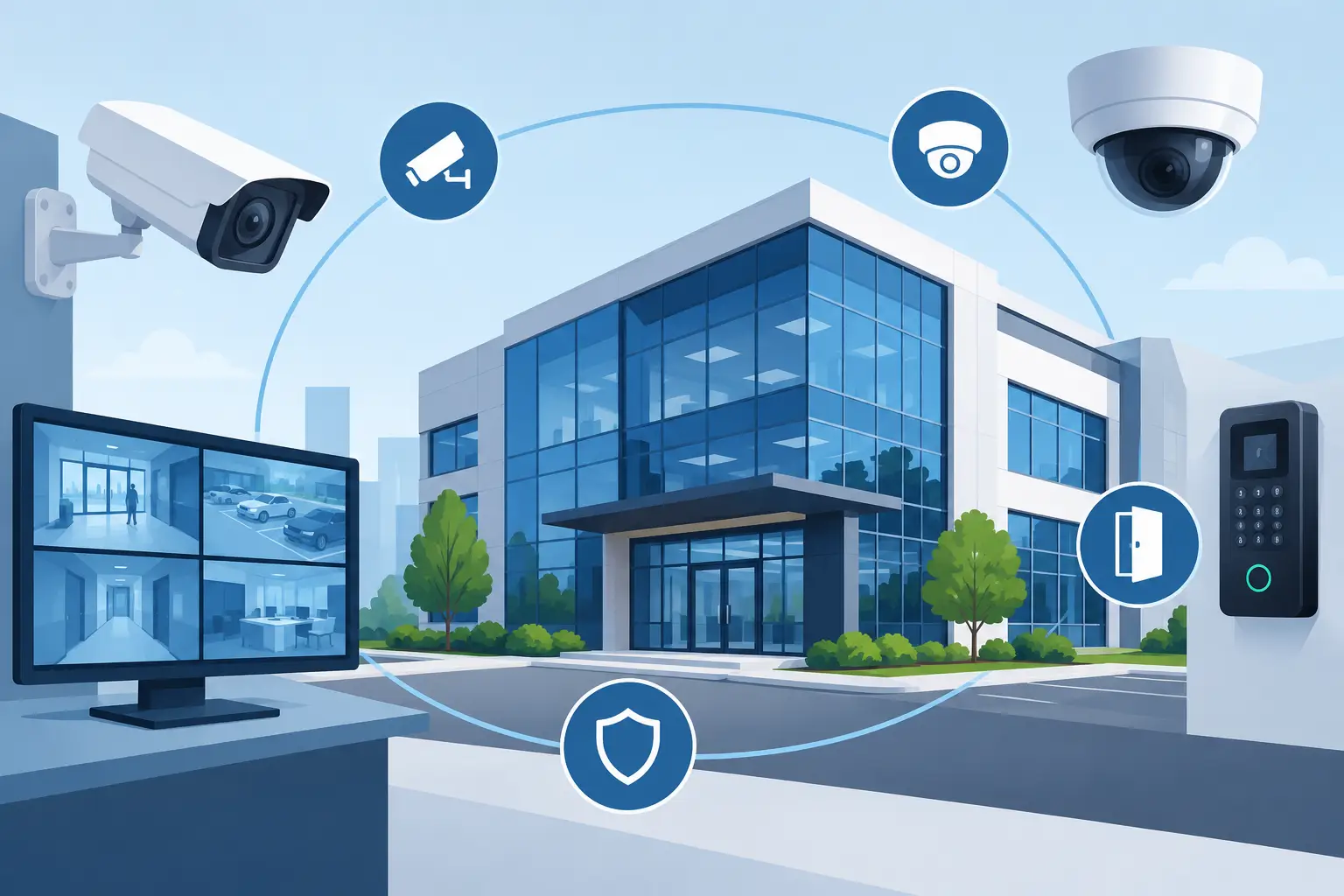
Physical measures establish boundaries and guide traffic. Fencing, vehicle barriers, locked gates, door hardware, controlled loading areas, and clearly marked entry points communicate where access is permitted. Good lighting supports safety and visibility, particularly in parking lots, rear service areas, and exterior walkways. Landscaping should be maintained so it does not create concealment near doors, gates, or cameras.
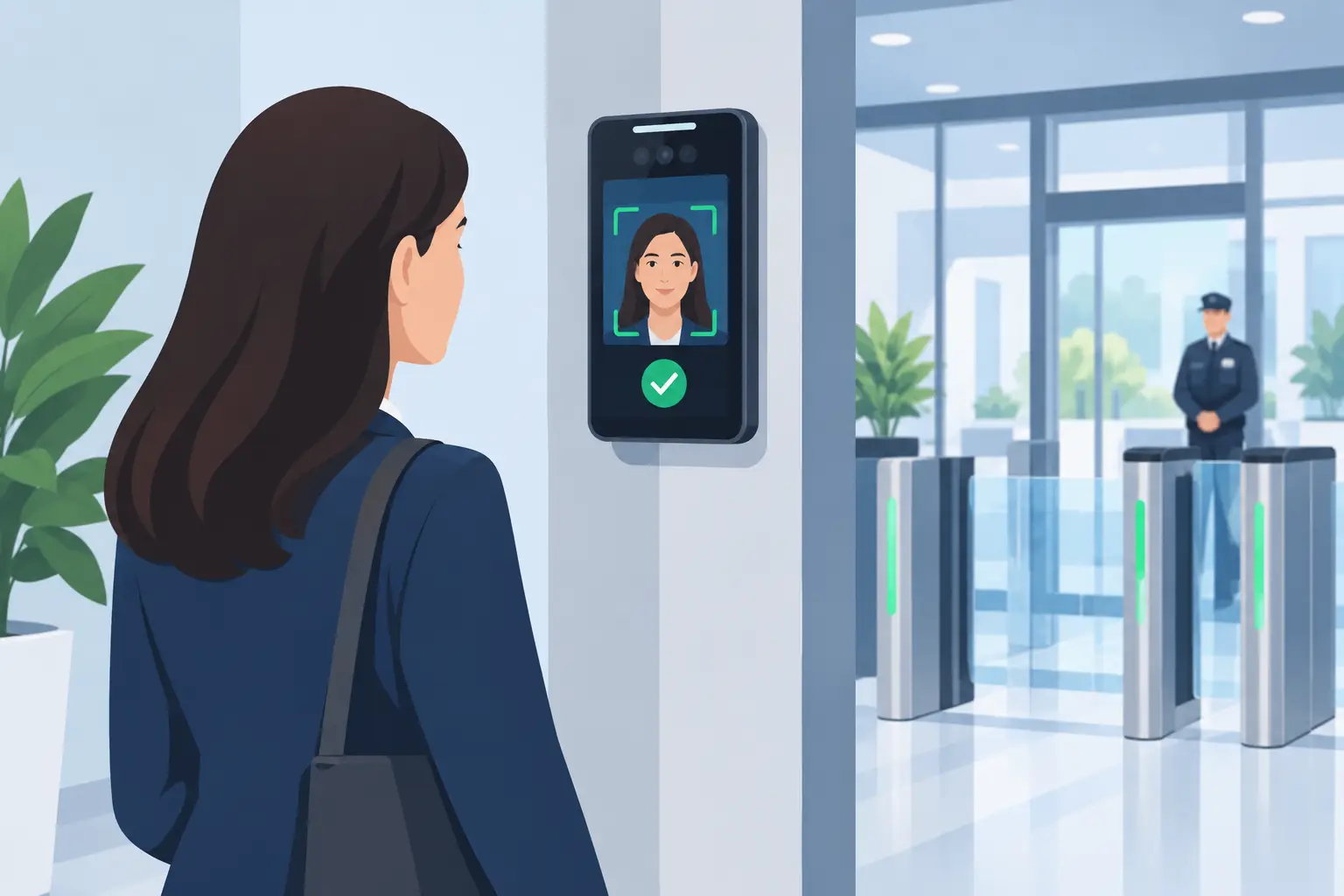
Technology extends awareness across a larger area. Video surveillance can help verify alarms, document incidents, and monitor locations that are not continuously staffed. Access control systems can limit entry by credential, schedule, or location. Intrusion detection can alert responsible personnel when a gate, door, or restricted zone is breached. These tools are valuable only when alerts are monitored, equipment is maintained, and someone has a defined response procedure.
Trained officers and mobile patrols provide the visible presence and decision-making technology cannot replace. They can check unsecured doors, investigate unusual activity, enforce visitor procedures, identify hazards, provide escorts, and coordinate with management or law enforcement when needed. At sites with varying risk throughout the day, scheduled or randomized patrols may provide stronger coverage than a static plan alone.
Access Control Is a Daily Operating Procedure
Most perimeter failures are process failures. An access control system cannot help if credentials are shared, former employees are not removed promptly, or gates are routinely opened for convenience. The best procedures are clear enough for staff to follow and disciplined enough to withstand a busy shift.
Organizations should define who can enter, through which locations, at what times, and under what conditions. Visitor and contractor procedures should include identification, sign-in requirements, escorts where appropriate, and a method for confirming who authorized the visit. Delivery procedures should direct drivers to a designated point rather than allowing unrestricted movement across the property.
Vehicle access deserves the same attention as pedestrian entry. Parking lots, delivery lanes, service roads, and employee entrances are common areas for theft, unauthorized parking, confrontations, and surveillance of the facility. Controls may range from clear signage and patrol visibility to gated entry and documented vehicle access, depending on the environment.
Consistency is essential. Employees should know how to report a damaged lock, malfunctioning gate, suspicious person, or recurring issue at an entry point. Management should treat those reports as operational intelligence, not as minor inconveniences. Small gaps are often the first indication that procedures need adjustment.
Security Presence Should Support, Not Disrupt
Visible security can deter unwanted activity, reassure staff, and give customers confidence. It can also create friction if officers are not trained to operate professionally in the client environment. The right posture depends on the location. A high-risk facility may need firm screening and controlled access. A commercial property or corporate office may require a more discreet presence focused on customer service, observation, and fast response.
This is where customized staffing matters. Armed officers may be appropriate for certain financial, critical infrastructure, or elevated-risk assignments, while unarmed officers, concierge-style coverage, or mobile patrol may better fit other properties. The decision should be based on documented risks, client policy, legal requirements, and the desired experience for the people using the site.
At Springfield Private Security, that planning is built around protecting people and operations without interfering with the client’s daily objectives. Officers should understand site expectations, escalation procedures, communication channels, and the limits of their authority before they begin a post.
Prepare for the Moment a Breach Occurs
Even strong perimeter controls cannot prevent every incident. The difference between a contained event and a costly disruption often comes down to response. Employees and security personnel need a simple, practiced process for recognizing a concern, communicating it, and taking appropriate action.
Response plans should address issues such as trespassing, attempted forced entry, suspicious packages, aggressive behavior, vehicle intrusion, vandalism, and unauthorized access after hours. They should establish who receives notifications, when management is contacted, when law enforcement is called, and how the site preserves video or written documentation.
Speed matters, but so does judgment. A person sleeping near a rear entrance, for example, may require a different response than an individual attempting to defeat a gate or test access points. Trained personnel can assess behavior, maintain distance, de-escalate when appropriate, and request additional support without creating unnecessary risk for employees or visitors.
Review Conditions Before They Create Gaps
Perimeter protection is not a one-time installation. Construction, tenant turnover, staffing changes, new delivery vendors, seasonal events, and altered operating hours can all introduce new exposures. A gate that worked well for one traffic pattern may become a bottleneck when shift schedules change. A camera view may be blocked after landscaping grows in. A former access point may remain active long after its original purpose has ended.
Regular inspections and post-incident reviews keep the plan current. Review access logs, patrol reports, alarm activity, maintenance issues, and employee concerns for patterns. If the same door is repeatedly found unsecured or the same area generates loitering complaints, the answer may involve equipment, staffing, lighting, procedures, or all four.
The most effective perimeter is one that reflects the way a property actually operates, not the way it was assumed to operate on paper. When boundaries are clear, entry is controlled, personnel are prepared, and response is timely, security becomes a dependable part of business continuity rather than a disruption to it.