A side entrance left unsecured after hours, an unfamiliar person walking a warehouse floor, or a dispute that escalates before anyone calls for help can change a normal workday quickly. To improve employee safety, organizations need more than a written policy. They need a practical system that identifies risks early, establishes clear responses, and supports employees without interfering with daily operations.
For business owners, operations leaders, and property managers, the goal is not to make every site feel restrictive. It is to create a workplace where employees know who belongs, how to get help, and what to do when conditions change.
Start With the Risks at Your Specific Site
Every facility has a different operating rhythm and risk profile. A corporate office may be concerned with visitor access, employee parking, and workplace violence. A distribution center may face vehicle-pedestrian conflicts, theft, late-night shifts, and large areas that are difficult to monitor. A medical office, retail location, financial institution, or critical infrastructure site may have public-facing risks that require a more visible security posture.
A site assessment turns general concerns into actionable priorities. Review the full employee journey, from arrival through departure. Look at parking areas, exterior lighting, entry points, reception areas, stairwells, loading docks, break rooms, restricted spaces, and the routes employees use during early or late shifts.
Ask practical questions. Are visitors consistently checked in? Can former employees or vendors still access the property? Are cameras positioned to support response, not just record incidents? Can an employee quickly summon help without leaving a vulnerable area? The answers often reveal small gaps that create larger exposure.
Risk assessments should also account for the surrounding environment. Nearby construction, changing tenant populations, local crime patterns, public protests, and seasonal events can all affect a site’s security needs. A plan that worked last year may need adjustment after a change in operations or neighborhood conditions.
Improve Employee Safety With Layered Access Control
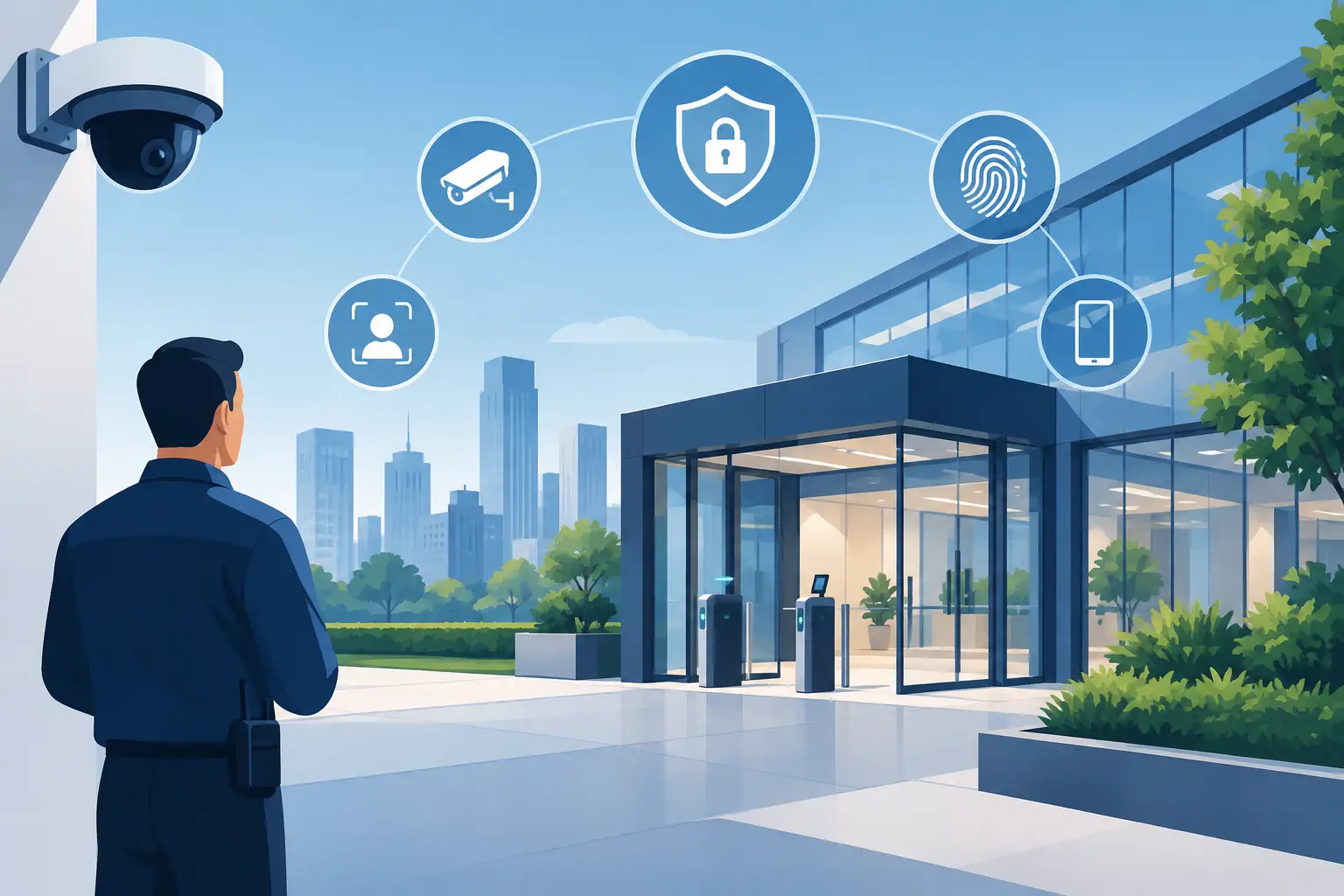
Access control is not one measure. It is a set of safeguards that work together to limit unauthorized entry, establish accountability, and help employees move through the facility with confidence.
Start by defining which spaces should be open, controlled, or restricted. Public-facing areas may require reception coverage and visitor procedures. Employee-only areas may require badges, codes, or monitored doors. High-value inventory, financial records, server rooms, medication storage, and sensitive operations may need additional authorization and audit trails.
The right level of control depends on the site. A small office may benefit from a disciplined visitor log, functioning door hardware, and reliable closing procedures. A larger campus may need electronic credentials, vehicle access management, camera coverage, and trained officers who can verify credentials and respond to irregular activity.
Technology can strengthen access control, but it cannot replace process. A locked door loses value when staff prop it open for convenience. Badge systems are less effective when credentials are shared. Employees should understand why procedures exist and how to follow them without slowing down legitimate work.
Make Reporting Simple and Response Credible
Employees notice concerning behavior long before it becomes an incident. The employee who sees someone testing doors, receives unwanted messages, notices repeated loitering, or hears a credible threat needs a straightforward way to report it.
Reporting channels should be clear, easy to use, and appropriate to the urgency of the situation. Employees should know when to call 911, when to contact on-site security or management, and when to report a non-emergency concern for follow-up. If reports disappear into an inbox without acknowledgment, people stop reporting.
A credible response process includes documentation, timely review, appropriate escalation, and communication with the people responsible for safety. It also protects confidentiality where possible. Employees may hesitate to report harassment, domestic violence concerns, or suspicious behavior if they believe their information will be mishandled.
Supervisors play an important role here. They should know how to receive a report calmly, avoid making promises they cannot keep, preserve relevant information, and notify the correct internal or external resources. Their response sets the standard for whether employees trust the program.
Train for Decisions People May Need to Make
Safety training is most useful when it reflects real decisions employees may face. A once-a-year presentation that covers policies without practice rarely prepares someone for a stressful event.
Training should address the hazards relevant to the workplace, including emergency evacuation, shelter procedures, severe weather, medical incidents, suspicious packages, active threats, and de-escalation. Employees do not need to become security professionals. They need to recognize warning signs, protect themselves and others, communicate clearly, and avoid actions that increase danger.
For public-facing teams, training may include how to set boundaries with disruptive visitors, when to seek assistance, and how to create distance rather than argue. For employees who open or close facilities, it should cover parking awareness, key control, alarm procedures, and what to do if they find evidence of forced entry.
Practice matters. Tabletop exercises allow leadership to test communication and decision-making without disrupting the business. Short drills can identify problems such as outdated contact lists, unclear assembly locations, inaccessible emergency equipment, or managers who are unsure who has authority to make a decision.
Avoid overtraining employees on scenarios they are not expected to manage. For example, employees should not be asked to physically intervene in a violent situation unless that responsibility is specifically assigned, trained, and supported. Their priority is personal safety, prompt notification, and following established procedures.
Build an Emergency Plan That Works After Hours
Many incidents happen outside normal business hours, when fewer people are present and leadership may be off-site. A strong emergency plan accounts for opening and closing shifts, contractors, lone workers, overnight operations, and employees working in remote sections of a property.
Every location should have current emergency contacts, clear escalation procedures, and defined responsibilities. Who contacts emergency services? Who meets first responders? Who communicates with employees, tenants, or customers? Who secures access after an incident? These details should be decided before a crisis, not during one.
Plans should also consider business continuity. After a fire alarm, medical emergency, attempted break-in, or violent disruption, the organization must decide whether to reopen, restrict access, preserve evidence, notify stakeholders, or arrange temporary coverage. A rapid response plan reduces confusion and helps protect both people and operations.
For multi-location organizations, the core standards can remain consistent while each site retains location-specific details. A single corporate policy is not enough if it does not account for different layouts, staffing levels, operating hours, and local emergency resources.
Use Professional Security Where It Adds Real Value
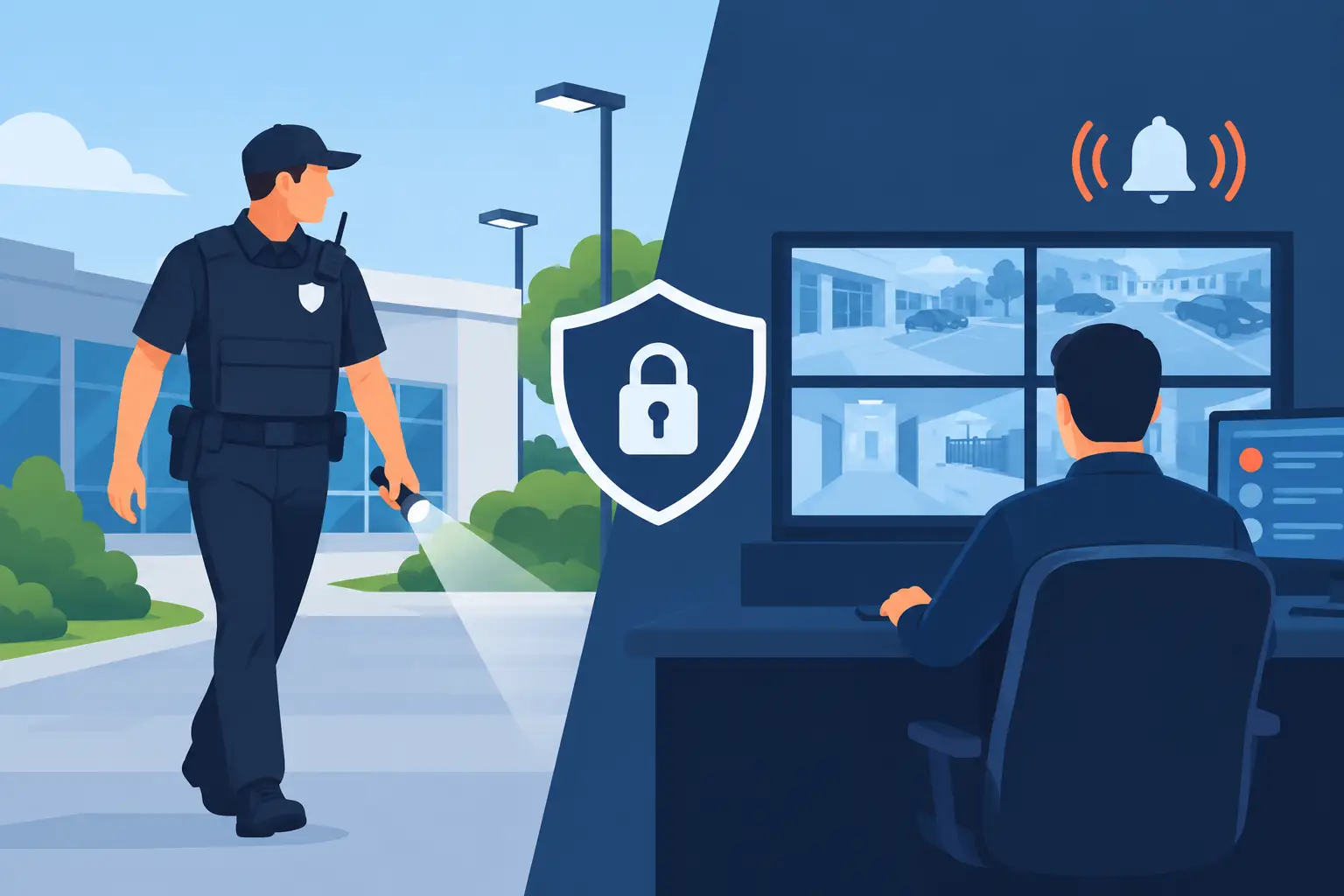
Security officers, mobile patrols, and rapid-response services are most effective when their role is defined by the site’s actual risks. Visible coverage can deter trespassing, theft, and unwanted behavior. It can also give employees a reliable point of contact during a medical issue, workplace dispute, access-control failure, or suspicious circumstance.
The trade-off is important: security should support the workplace, not create unnecessary friction. A professional officer understands the difference between a customer needing directions, a vendor arriving after hours, and behavior that requires intervention. The right approach is firm, respectful, and aligned with the organization’s culture.
At higher-risk sites, trained armed or unarmed officers may be appropriate based on the threat environment, client needs, local requirements, and operational goals. At lower-risk locations, mobile patrols, opening and closing checks, alarm response, and security consulting may provide better value. There is no one-size-fits-all staffing model.
Springfield Private Security approaches coverage as part of a broader physical risk management plan. Effective security personnel should know the property, understand post orders, communicate with management, document incidents accurately, and respond without disrupting legitimate business activity.
Review Safety Performance Before an Incident Forces Change
Employee safety is not a one-time project. Review incidents, near misses, access-control issues, alarm activity, employee concerns, and response times on a regular schedule. Trends matter. Several minor parking-lot complaints, repeated door alarms, or a rise in visitor conflicts may indicate a developing problem.
Use those findings to make specific adjustments. That may mean changing patrol times, improving lighting, updating a visitor procedure, adding staff training, revising emergency contacts, or increasing coverage during a temporary period of risk. Small corrections made early are often less costly than responding after a serious event.
The strongest safety programs are visible in everyday operations: doors that secure properly, employees who know how to report concerns, leaders who respond promptly, and security coverage that is ready when it is needed. That consistency gives people a reason to feel protected and a clear path to follow when something does not look right.