A former employee badge working at 6:15 a.m. is not a technology failure. It is an access control failure. The same is true when a delivery driver reaches a restricted floor, a propped door goes unnoticed, or a staff member has no clear way to report a suspicious person.
Learning how to build access control starts with understanding that locks, cards, cameras, and guards are only parts of a larger operating system. Effective access control gives authorized people a clear path to do their jobs while making it harder for unauthorized people to enter, move through, or interfere with the facility. It protects people, property, information, and continuity without turning the workplace into an obstacle course.
Start With the Risk, Not the Hardware
Many organizations begin by selecting a card reader, camera platform, or electronic lock. That can lead to expensive equipment that does not address the actual exposure. Begin instead with a practical assessment of what needs protection, who needs access, when they need it, and what could happen if access is misused.
Walk the site as employees, visitors, vendors, and an intruder might. Review exterior doors, loading areas, parking lots, reception points, elevators, stairwells, server rooms, stockrooms, roof access, and emergency exits. A busy office suite has different needs than a distribution facility, medical office, bank branch, construction site, or multi-tenant commercial property.
Ask direct questions. Which areas contain valuable assets, sensitive information, hazardous materials, or critical systems? Where do employees work alone? Which doors are routinely left unsecured for convenience? Are there periods such as shift changes, events, deliveries, or closing time when accountability drops?
The goal is not to apply maximum restriction everywhere. It is to identify the places where a lapse in access could create safety, liability, theft, privacy, or operational problems.
Define Access Zones Before You Assign Credentials
A facility is easier to protect when it is divided into zones with clear access expectations. At a basic level, most sites have public areas, employee-only areas, restricted areas, and critical areas. The more sensitive the zone, the more verification and documentation it should require.
Public areas may include a lobby, reception area, sales floor, or public event entrance. These spaces should still be monitored and designed to direct visitors toward a check-in point. Employee-only areas could include offices, break rooms, operational floors, and internal corridors. Restricted areas may include inventory storage, records rooms, maintenance rooms, and administrative offices. Critical areas often include server rooms, key cabinets, cash handling areas, control rooms, laboratories, and locations with high-value equipment.
Zone design should reflect how the business actually functions. If employees must pass through three locked doors to handle routine customer requests, they will find workarounds. If every contractor receives broad access because no one has defined a vendor route, the site has created unnecessary exposure.
Use Least-Privilege Access
Grant the minimum access needed for a person to perform their responsibilities. A facilities manager may need after-hours access to utility rooms, while a daytime receptionist may not. A temporary contractor may require access to one work area for two days, not every employee entrance for a month.
This principle reduces risk and makes investigations clearer. When permissions are tied to job duties, it is easier to determine whether a person was authorized to be in a particular area at a particular time.
Choose Controls That Match Each Entry Point
Access control works best as layered protection. A perimeter gate may deter unauthorized vehicle entry, while lighting and cameras improve visibility. At the building entrance, an intercom, credential reader, receptionist, or security officer can verify identity. Inside the facility, electronic locks and controlled doors protect the areas that matter most.
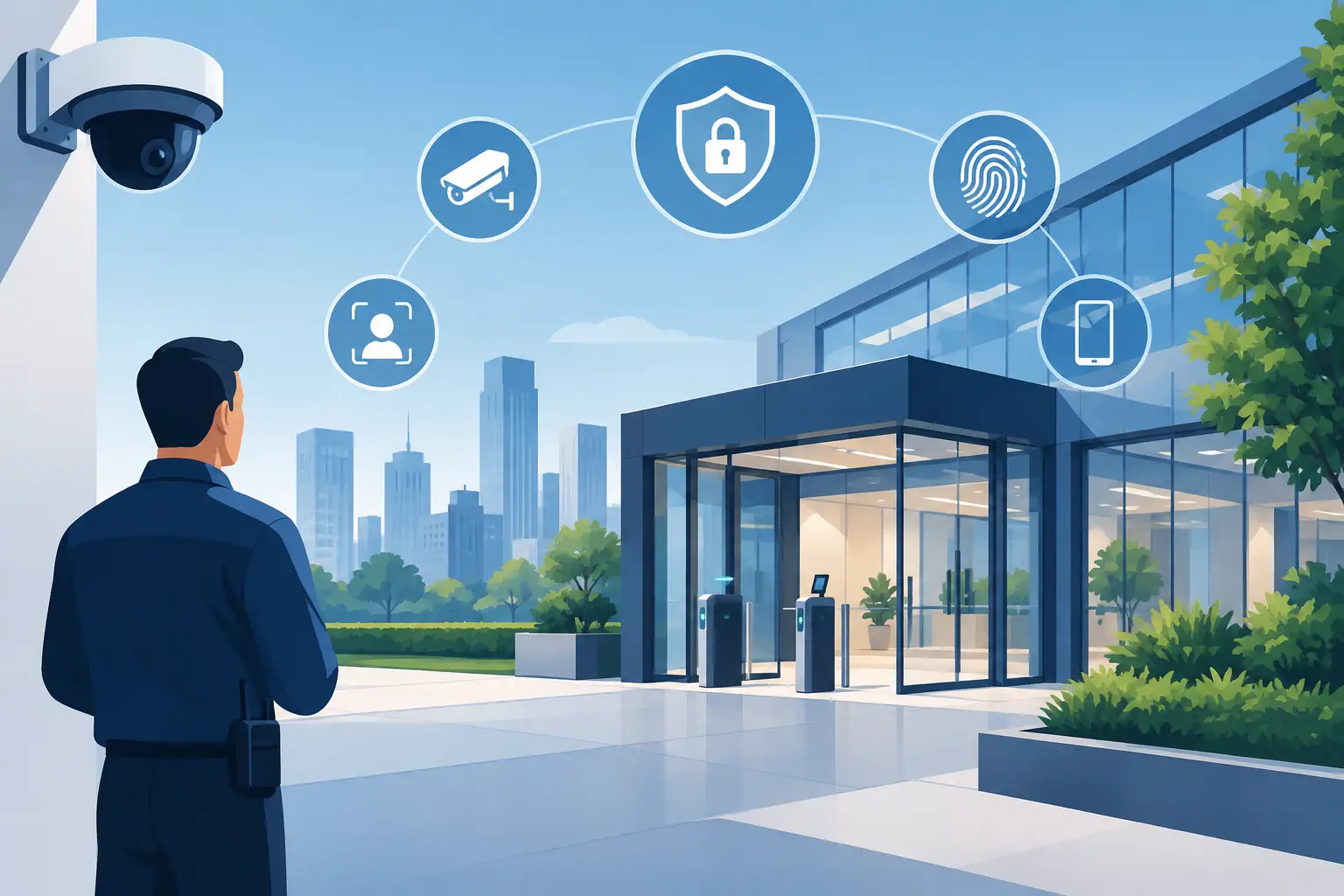
The right tools depend on the site and the risk. Mechanical keys can be appropriate for low-risk locations, but they are difficult to track once copied or issued. Key fobs and access cards provide an audit trail and can be disabled quickly. Mobile credentials can simplify administration, though organizations should confirm how devices are enrolled, secured, and removed. Biometric access can add assurance in high-security areas, but it may introduce privacy, cost, and employee-relations considerations.
Physical barriers still matter. A credential reader does little good if someone can walk around the door, enter through an unsecured loading dock, or follow an authorized person through a propped entrance. Door hardware, fencing, gates, visitor routing, lighting, cameras, and trained personnel should work together.
For high-risk sites, consider whether access should require two forms of verification, such as a credential plus a PIN. This adds protection, but it can slow traffic. The decision should be based on the consequences of unauthorized entry, not on a desire to use more technology.
Build a Clear Credential and Key Process
An access control system is only as reliable as the process behind it. Someone must be responsible for approving access, issuing credentials, documenting keys, reviewing permissions, and immediately removing access when roles change.
Create a written authorization process that identifies who can request access and who can approve it. Supervisors should not be able to grant unrestricted access informally without review. The process should account for employees, temporary staff, contractors, vendors, cleaning crews, tenants, and visitors.
Credentials should be assigned to an individual whenever possible. Shared badges and shared door codes eliminate accountability. If a shared credential is unavoidable for a specific operational reason, document who has it, limit its permissions, and change it regularly.
Offboarding is one of the most critical control points. Access should be disabled as soon as employment or a contract ends, not after the next weekly administrative review. Retrieve badges, keys, parking permits, radios, and any other items that allow entry or control of the site. For involuntary terminations or sensitive departures, coordinate the access removal with human resources, management, and security before the conversation begins.
Make Visitor Management Part of How You Build Access Control
Visitors are not an exception to access control. They are one of its most common tests. A professional visitor process establishes who is expected, who is responsible for them, where they may go, and how long they may remain on site.
At minimum, visitors should check in at a defined point, provide identification when appropriate, receive a visible temporary credential, and be directed to their destination. Depending on the environment, they may need an escort, safety briefing, nondisclosure acknowledgment, or advance approval.
Delivery personnel need their own procedure. They should not have to search for an open door or wander through employee areas to find a signature. Designated delivery entrances, receiving hours, signage, and staff notification reduce confusion while improving control.
For events, access planning must account for higher traffic and changing conditions. Separate guest entry from staff and vendor entry when possible. Establish screening requirements, credential colors, restricted backstage or operations zones, and a process for responding to lost badges or disruptive attendees.
Connect Technology to Human Response
Access logs, alarms, and cameras are useful only if someone reviews and acts on what they reveal. Decide in advance what should happen when a door is forced open, left ajar, accessed after hours, or used by an invalid credential.
For a small office, the response may be an alert to a manager and a documented follow-up the next business day. For a critical facility, it may require an immediate patrol response, live camera review, notification to site leadership, and law enforcement coordination when warranted. The response must fit the location, operating hours, and level of risk.
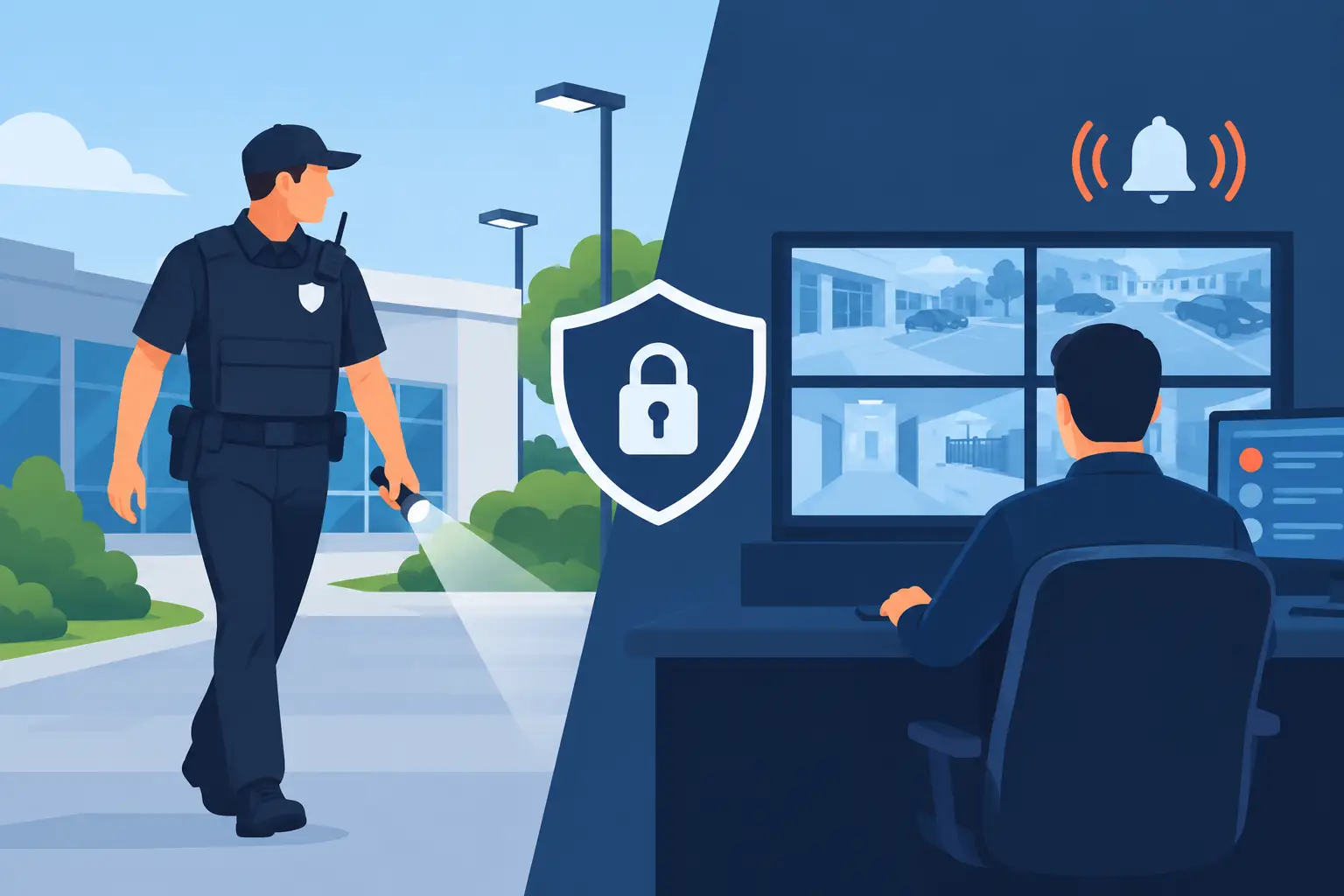
Security officers and mobile patrols can add an important layer where electronic controls alone are not enough. They can verify alarms, enforce visitor procedures, check vulnerable doors, identify suspicious activity, and provide a visible deterrent. At Springfield Private Security, access control planning is approached as an operational function, not just a device installation. The focus is on protecting the client environment while allowing the business to keep moving.
Test, Review, and Improve the System
Access control needs routine inspection. Doors change use, departments move, employees are promoted, vendors change, and incidents expose weak points. Conduct regular access reviews to confirm that credentials still match current roles and that former employees, expired vendors, and inactive users have been removed.
Test door alarms, emergency exits, intercoms, cameras, and backup power according to a defined schedule. Review whether doors are being propped open, whether visitors are bypassing check-in, and whether staff understand how to report access concerns. These are often signs that a policy is unrealistic, poorly communicated, or not being enforced consistently.
Document incidents and near misses. A door found unsecured may appear minor, but repeated door-propping can point to a workflow issue that needs a safer solution. Correcting the cause is more effective than repeatedly reminding employees to follow a process that does not fit their work.
The strongest access control plan is one people can follow under normal pressure. When zones are clear, permissions are current, visitors are managed, and response procedures are practiced, security becomes a dependable part of daily operations rather than a disruption waiting to happen.