A warehouse can lose more in one poorly controlled shift than in months of ordinary shrink. An unsecured dock door, a shared access code, or a delayed response to an alarm can expose inventory, equipment, employees, and customer commitments at once. The best security measures for warehouses are not a single camera system or a guard at the front gate. They are a coordinated set of controls built around how the facility actually operates.
For operations leaders, the objective is clear: reduce preventable loss and safety risks without slowing receiving, fulfillment, shipping, or legitimate vendor access. That requires a plan that accounts for the site layout, inventory value, operating hours, workforce size, surrounding area, and the speed at which an incident can affect business continuity.
Start With a Warehouse-Specific Risk Assessment
Security planning should begin on the floor, in the yard, and at the loading docks, not with a generic equipment checklist. Walk the property during active operations and again after hours. Look at where people enter, where trailers wait, where high-value goods are staged, and which areas cannot be seen from a normal workstation.
A useful assessment identifies both outside threats and internal exposure. External risks may include cargo theft, trespassing, vehicle break-ins, vandalism, and unauthorized entry through perimeter gaps. Internal risks can involve theft, tailgating through controlled doors, misuse of keys or credentials, and visitors moving beyond approved areas.
The right measures depend on the facility. A high-volume distribution center with overnight activity needs different coverage than a smaller warehouse that stores specialty materials and closes at 6 p.m. Security should match the operational risk, not simply follow the same template used at another property.
Best Security Measures for Warehouses: 9 Priorities
1. Secure the Perimeter Before Intruders Reach the Building
The perimeter is the first opportunity to deter and detect a problem. Fencing, maintained gates, adequate lighting, visible signage, and clear sightlines make unauthorized access more difficult and more noticeable. Landscaping should not create hiding places near doors, fence lines, or equipment yards.
Perimeter cameras can provide valuable coverage, but only if they are positioned for usable identification and monitored when an alert occurs. A camera pointed at a dark corner with poor image quality may document a loss without preventing it. Lighting and camera placement should be tested at night, in weather conditions, and from the perspective of someone approaching the property.
2. Control Every Point of Entry
Warehouses often have more access points than leaders realize: employee entrances, emergency exits, dock doors, office doors, roof hatches, maintenance gates, and vehicle gates. Each should have a defined purpose, approved users, and a method for confirming when it is open or secured.
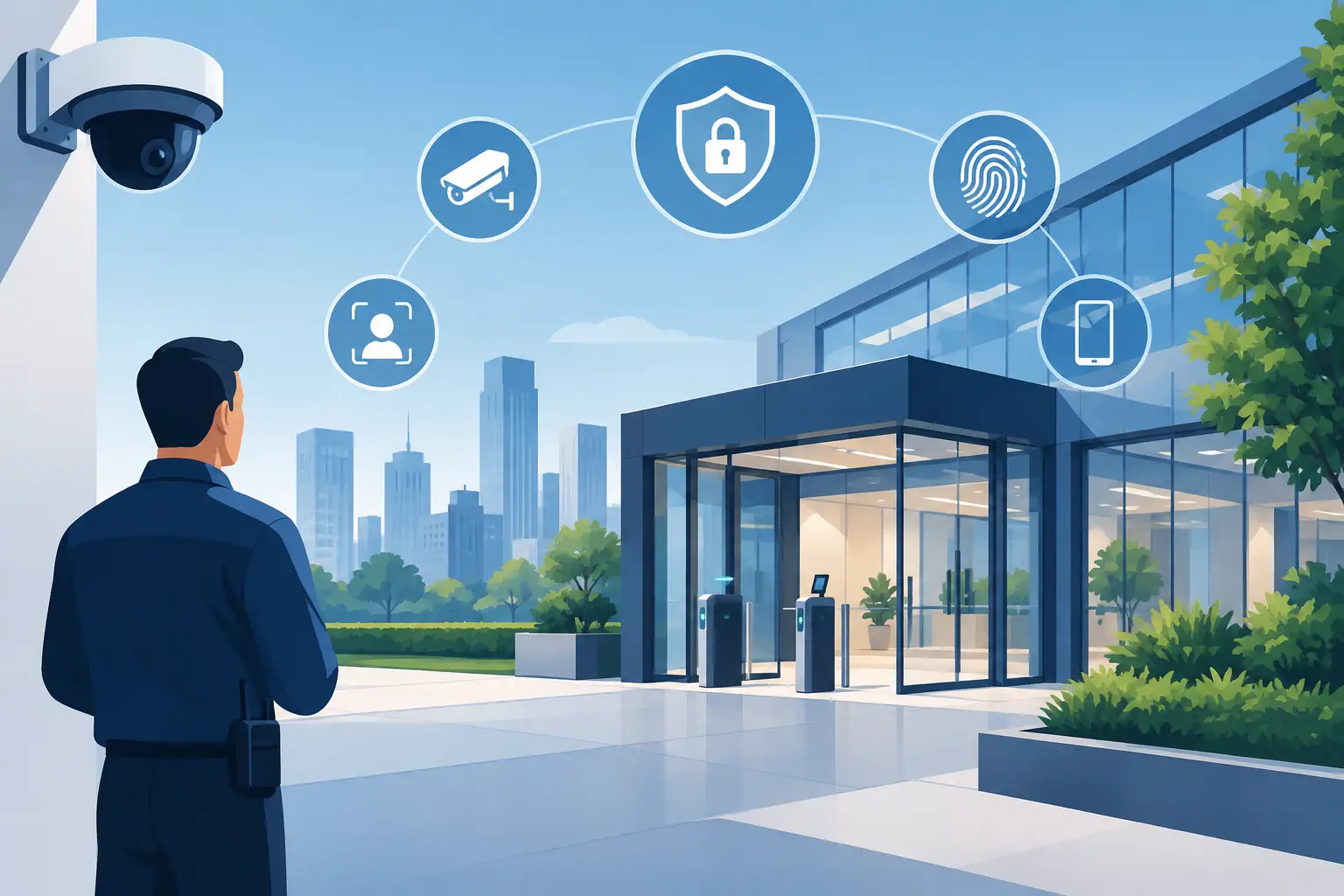
Electronic access control is especially effective for employee and management entrances because it creates accountability. Individual credentials are preferable to shared codes, which are difficult to manage after turnover. When an employee, contractor, or vendor no longer needs access, credentials should be removed promptly.
Emergency exits require special attention. They must remain available for life safety, but alarms and door-position monitoring can alert management or security personnel when an exit is opened without authorization.
3. Establish a Disciplined Visitor and Contractor Process
A visitor badge without verification is not access control. Delivery drivers, maintenance vendors, temporary labor, auditors, and prospective clients should be checked in, given a clear destination, and restricted to the areas required for their work.
For higher-risk facilities, require government-issued identification, record arrival and departure times, and use temporary credentials that expire automatically. Contractors working after hours should have a designated site contact and a defined work area. This protects the vendor as well as the warehouse by creating a documented record of who was on site.
4. Protect Loading Docks and Trailer Yards
Loading docks create necessary exposure. Doors open frequently, drivers arrive on changing schedules, and inventory can be temporarily staged near points of exit. Cargo theft groups understand these conditions and often look for confusion in shipping procedures rather than forcing entry.
Use dock assignments, trailer seals, trailer and container inspections, and clear chain-of-custody procedures for high-value shipments. Drivers should know where to wait and should not have unrestricted access to warehouse operations. When feasible, separate pedestrian traffic from vehicle movement and maintain controlled access between the trailer yard and the building.
A security officer or mobile patrol presence around docks can also identify problems that technology may miss, such as an unfamiliar vehicle lingering near a gate, a broken seal, an unsecured trailer, or a door left open after a shift change.
5. Use Cameras, Alarms, and Analytics as Detection Tools
Electronic systems work best when they support a response plan. Cameras should cover entrances, docks, shipping and receiving areas, high-value inventory zones, cash or office areas, and the exterior approach to the building. Retention periods should be long enough to support investigations that are not discovered immediately.
Intrusion alarms, glass-break sensors, door contacts, and motion detection can provide early warning after hours. In some cases, video analytics can flag activity in restricted zones or outside scheduled operating periods. These tools reduce the time between suspicious activity and awareness, but they require trained personnel who know what to do with an alert.
Avoid assuming more equipment automatically means better protection. A smaller system that is maintained, reviewed, and tied to clear response procedures will generally deliver more value than a larger system that produces false alarms and receives little attention.
6. Put Trained Security Officers Where Judgment Matters
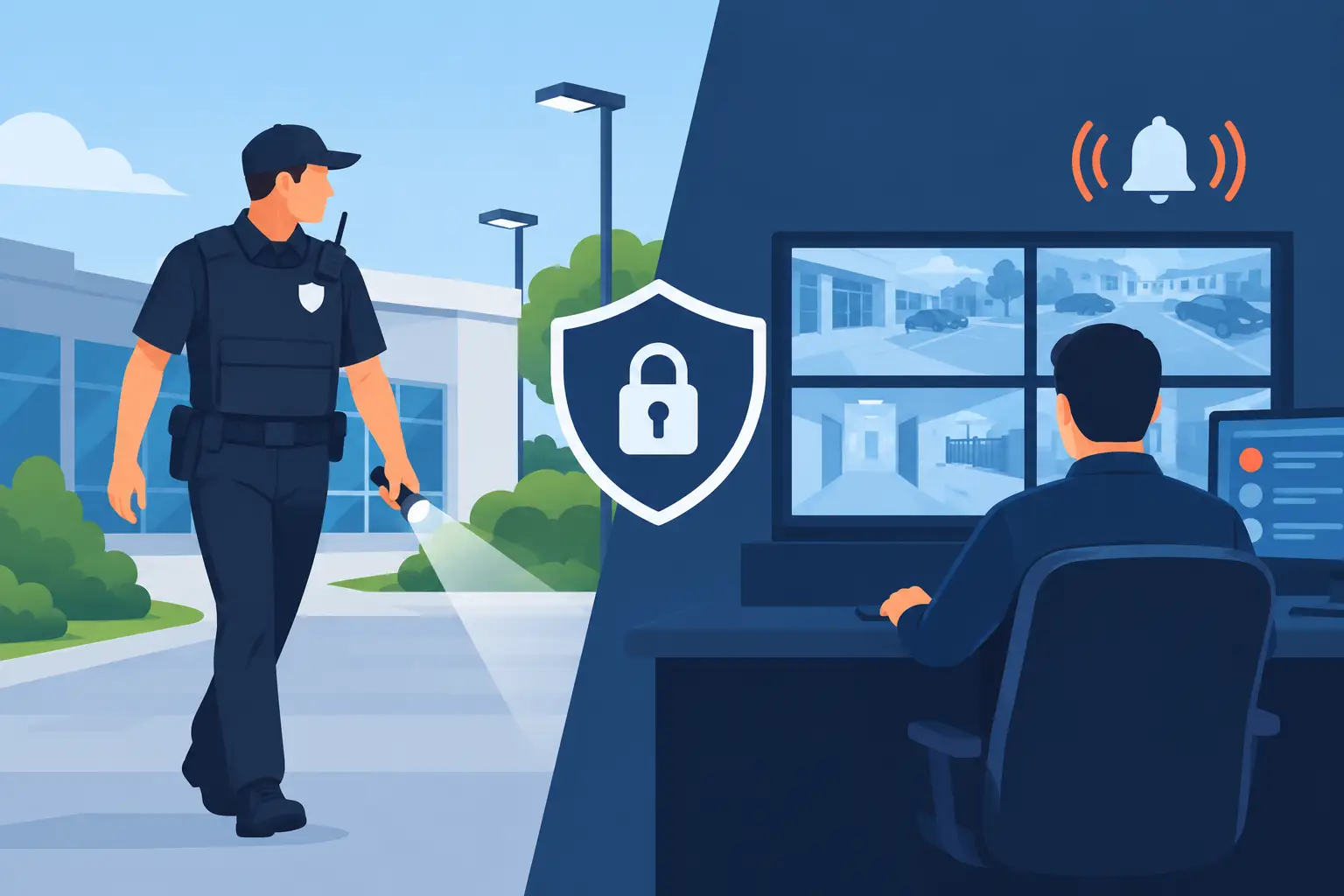
Security officers add a human layer that cannot be replaced by gates and cameras alone. A professional officer can verify credentials, conduct patrols, observe behavior, manage visitor traffic, report safety issues, and respond to developing situations before they become larger incidents.
The assignment should fit the facility. An unarmed officer may be appropriate for access control, lobby coverage, and routine patrols. Sites with heightened risk, sensitive assets, or a history of serious threats may require a different posture, subject to applicable laws, client policy, and a thorough risk assessment.
The value comes from more than visibility. Officers should understand post orders, escalation procedures, emergency contacts, shipping schedules, restricted areas, and the client’s expectations for customer and employee interaction. Professional security should support operations, not create unnecessary friction at the gate.
7. Maintain Mobile Patrol and Rapid Response Coverage
Not every warehouse needs a full-time officer at every hour. For lower-traffic sites, scheduled or randomized mobile patrols can provide visible deterrence, perimeter checks, lock verification, alarm response, and documented reporting at a more measured cost.
Patrol timing should not be overly predictable. A patrol program is stronger when it addresses the periods of greatest exposure, including shift changes, weekends, holidays, and hours when nearby businesses are closed. It should also include a clear process for contacting management, law enforcement, fire services, or emergency repair vendors when an incident is found.
8. Train Employees to Recognize and Report Concerns
Employees are often the first people to see a security weakness. They notice unfamiliar people in restricted areas, doors that do not latch, damaged fencing, missing seals, unusual vehicle activity, and coworkers bypassing procedures. They need simple, practical instructions for reporting concerns without fear of retaliation.
Training should cover tailgating, badge use, visitor escort requirements, suspicious packages, workplace violence indicators, and what to do during an alarm or emergency. Keep the guidance tied to real warehouse conditions. A short, recurring briefing at shift meetings is often more effective than an annual presentation that employees do not remember.
Management should also close the loop. When staff report a broken lock or poor lighting, timely correction reinforces that security procedures are operational priorities rather than paperwork.
9. Prepare for Incidents Before They Disrupt Operations
The measure of a security program is not whether an incident ever occurs. It is whether the organization can contain the event, protect people, preserve evidence, and return to normal operations quickly.
Every warehouse should have written procedures for theft, trespass, workplace violence, fire, severe weather, medical emergencies, utility failures, and suspicious activity. Supervisors should know who has authority to stop operations, secure a scene, contact law enforcement, notify customers, and communicate with employees.
Test these procedures. A tabletop exercise can reveal that key phone numbers are outdated, camera access is limited to one manager, or no one knows who can authorize a temporary guard after a break-in. Those are manageable problems when identified in advance.
Choose Coverage That Fits the Operation
The most effective warehouse security program balances prevention, detection, and response. A facility with frequent truck traffic may place its priority on dock control and yard patrols. A warehouse carrying pharmaceuticals, electronics, or regulated goods may need stronger access restrictions, documentation, and surveillance. A multi-location operator may benefit from standardized post orders and reporting across sites, while retaining local adjustments for each facility.
Budget matters, but the lowest-cost approach can become expensive when it leaves gaps at the times and locations that matter most. Review incident history, loss trends, insurance requirements, customer obligations, and the cost of a delayed shipment or shutdown. Then assign resources where they reduce actual exposure.
Springfield Private Security approaches warehouse protection as an operational partnership: coverage is built around the site, the people working there, and the response standards needed to keep business moving.
A secure warehouse should not feel like a fortress to employees or legitimate visitors. It should feel orderly, well-managed, and prepared. When access is controlled, risks are reported early, and trained personnel can respond without delay, security becomes part of dependable daily operations rather than a disruption to them.