A bank branch can look calm while carrying significant daily risk. Employees handle cash, customer information, and sensitive transactions. Customers expect a professional, welcoming experience. Leaders must protect all of it without turning routine banking into an intimidating process. Effective bank security meets that standard through visible readiness, disciplined procedures, and rapid response when conditions change.
The right approach is not simply placing an officer near the entrance. It is building a practical protection plan around the branch’s layout, transaction activity, staffing levels, operating hours, neighborhood conditions, and emergency procedures. Security should support the branch team, discourage criminal activity, and preserve business continuity.
Bank Security Is an Operational Requirement
Financial institutions face a mix of predictable and evolving threats. Theft, robbery, fraud-related confrontations, trespassing, vandalism, workplace violence, suspicious behavior, and after-hours intrusion can all affect a branch or operations center. Even an incident that does not result in a loss can disrupt staff, unsettle customers, create liability exposure, and damage trust.
Security planning must account for the fact that many incidents develop before they become emergencies. An individual may be casing entrances, testing access points, attempting to enter restricted areas, or escalating a disagreement with staff. A trained security professional can identify those warning signs early, communicate with management, and take appropriate action before the situation disrupts operations.
This is why a bank needs more than a generic security presence. Officers must understand how to remain observant without interfering with legitimate customers, how to protect restricted areas, and how to respond decisively while following the institution’s policies and local law enforcement procedures.
Build a Layered Bank Security Plan
No single measure can protect a financial institution from every threat. A camera system can document activity, but it cannot physically intervene. Access control can limit entry, but it does not replace trained judgment when a visitor is behaving unpredictably. On-site officers provide immediate presence and response, but they are most effective when supported by clear procedures and a well-designed facility.
A layered plan brings these measures together. The exact combination depends on the site, but the foundation usually includes physical security, trained personnel, controlled access, surveillance, communication protocols, and emergency response planning.
Visible, Professional Officer Coverage
An on-site officer remains one of the strongest deterrents available to a bank. The officer’s role is not limited to reacting after a crime occurs. Professional coverage can deter opportunistic theft, discourage unauthorized entry, observe suspicious behavior, assist with opening and closing procedures, and provide an immediate point of contact when employees need support.
The level of coverage should match the risk. Some branches may need an unarmed officer during peak customer hours. Others may require armed security based on cash activity, prior incidents, location, or corporate policy. There is no one-size-fits-all answer. Armed coverage can be appropriate for higher-risk environments, but it requires careful selection, training, supervision, and alignment with the bank’s procedures. In lower-risk settings, a highly visible unarmed professional may provide the right balance of deterrence and customer comfort.
An effective officer understands the difference between being present and being intrusive. They maintain awareness, project professionalism, and avoid creating unnecessary friction for employees and legitimate visitors.
Access Control That Matches the Facility
Banks contain areas that should never be freely accessible, including teller lines, vault corridors, cash handling rooms, records storage, employee offices, and network or utility spaces. Access control should reflect how the branch actually operates, not just how it appears on a floor plan.
This means reviewing who has access, when they need it, and how entry is documented. Key control, badge access, visitor procedures, secured doors, and delivery protocols all help reduce opportunities for unauthorized entry. Managers should also review access when employees change roles or leave the organization. A former employee credential or unreturned key is a preventable vulnerability.
After-hours access deserves particular attention. Branches may be quiet after closing, but cash-related work, cleaning crews, contractors, and maintenance personnel may still need entry. Clear authorization procedures and security checks help distinguish legitimate activity from a potential threat.
Surveillance With Active Follow-Through
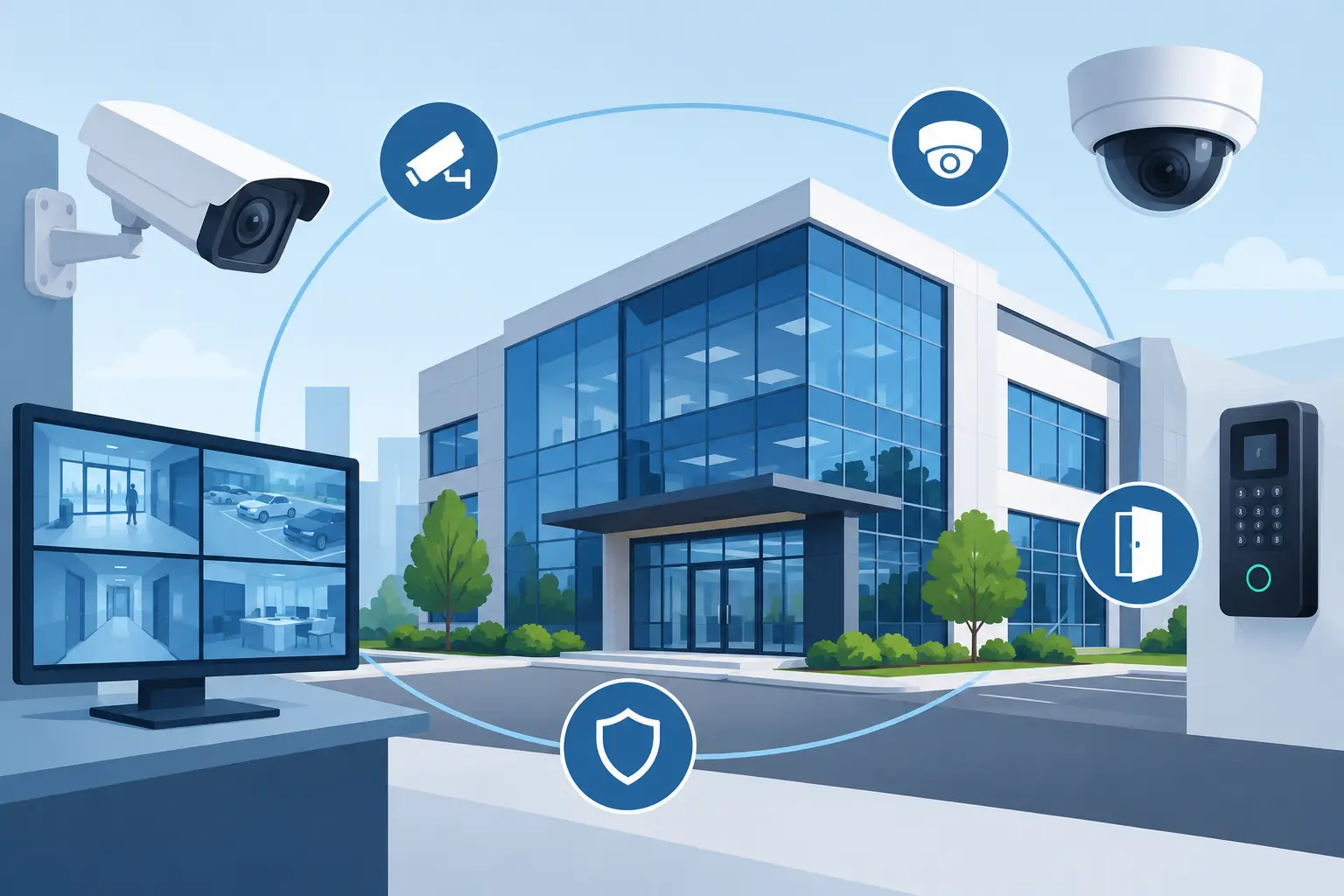
Security cameras are valuable for deterrence, investigation, and accountability. Their value falls quickly, however, when cameras are poorly positioned, footage is unreliable, or no one has a process for reviewing concerns. Coverage should focus on entrances, customer areas, ATM approaches, parking areas, cash-handling zones, employee-only doors, and other risk points identified during a site assessment.
Surveillance works best alongside active observation. A trained officer or monitoring team can recognize behavior that a recording system alone may not address in real time. When an incident occurs, clear reporting and preserved footage also give bank leadership and law enforcement the information they need to respond appropriately.
Protect the Moments When Risk Increases
Certain periods deserve elevated attention because routine procedures can create predictable exposure. Opening and closing, cash deliveries, ATM servicing, shift changes, and contractor visits all create moments when access, valuables, or employee movement may be more visible.
Opening and closing procedures should never rely on habit alone. Staff should know who is responsible for checking the premises, how to report irregular conditions, what to do if someone is waiting nearby, and when to request assistance. Mobile patrols or on-site coverage can add a critical layer of support during these vulnerable windows.
Parking lots and exterior areas also matter. A secure lobby does not fully protect employees walking to vehicles after dark or customers using an ATM outside normal business hours. Lighting, patrol visibility, camera placement, landscaping, and clear sightlines should all be reviewed as part of the overall security plan.
Train Employees Without Making Security Their Full-Time Job
Employees should not be expected to perform the role of security officers. They should, however, know how to recognize concerns, protect themselves, and report information quickly. The goal is simple: give the branch team practical procedures without adding confusion to a demanding customer-facing job.
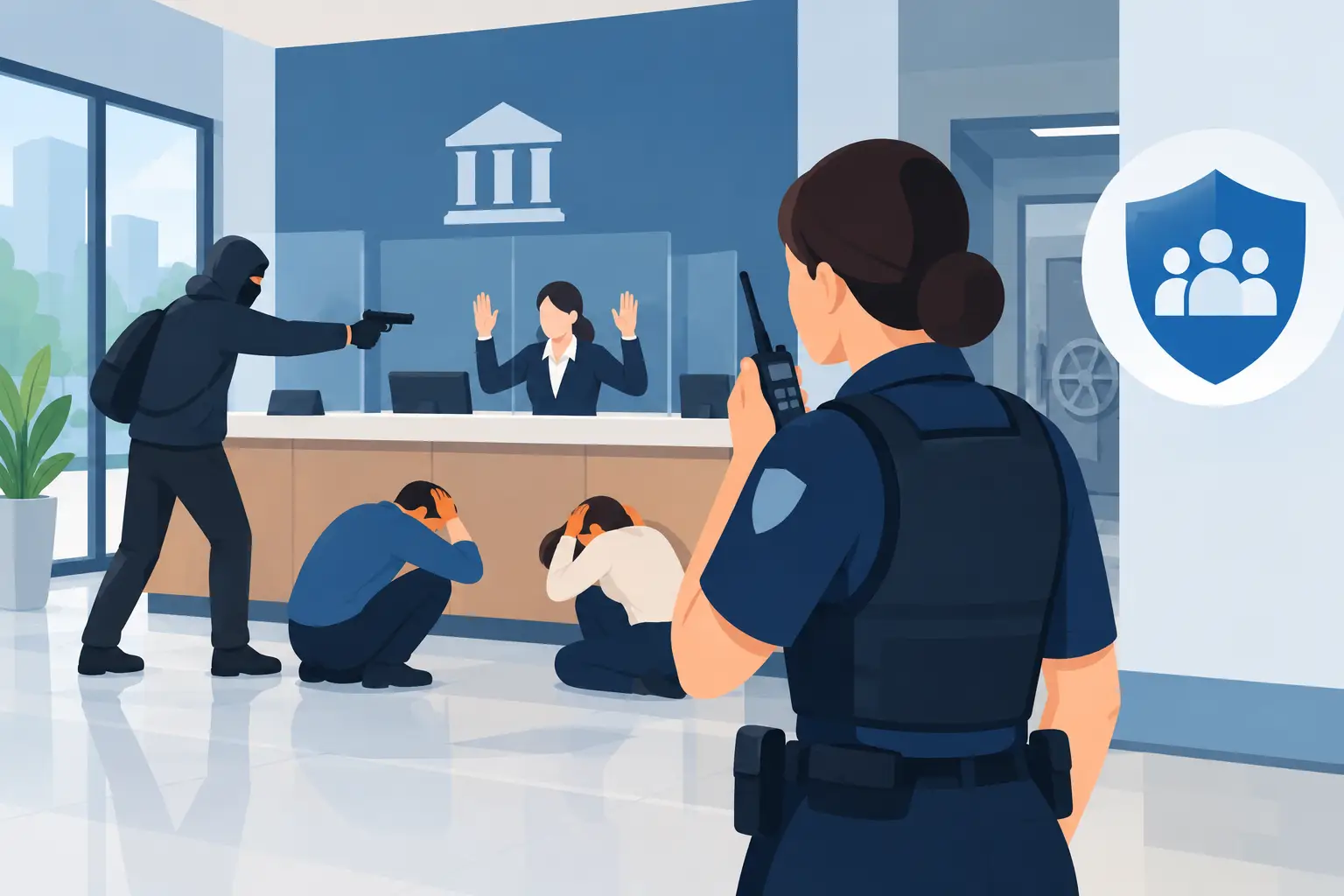
Training should cover suspicious behavior, workplace violence warning signs, unauthorized visitors, emergency communication, robbery response, and evacuation or shelter procedures. Staff also need to understand which actions to avoid. During a robbery or volatile confrontation, protecting life takes priority over protecting property. Employees should not pursue suspects, attempt to physically intervene, or place themselves at greater risk to stop a loss.
Short, scenario-based refreshers are often more useful than lengthy annual presentations. A team that has discussed how to respond to a concerning visitor or an after-hours intrusion is more likely to act calmly when it matters.
Incident Response Must Be Clear Before It Is Needed
A security plan is only as strong as the response it produces under pressure. When an incident occurs, uncertainty costs time. Employees, managers, security personnel, and emergency responders need defined responsibilities and reliable communication.
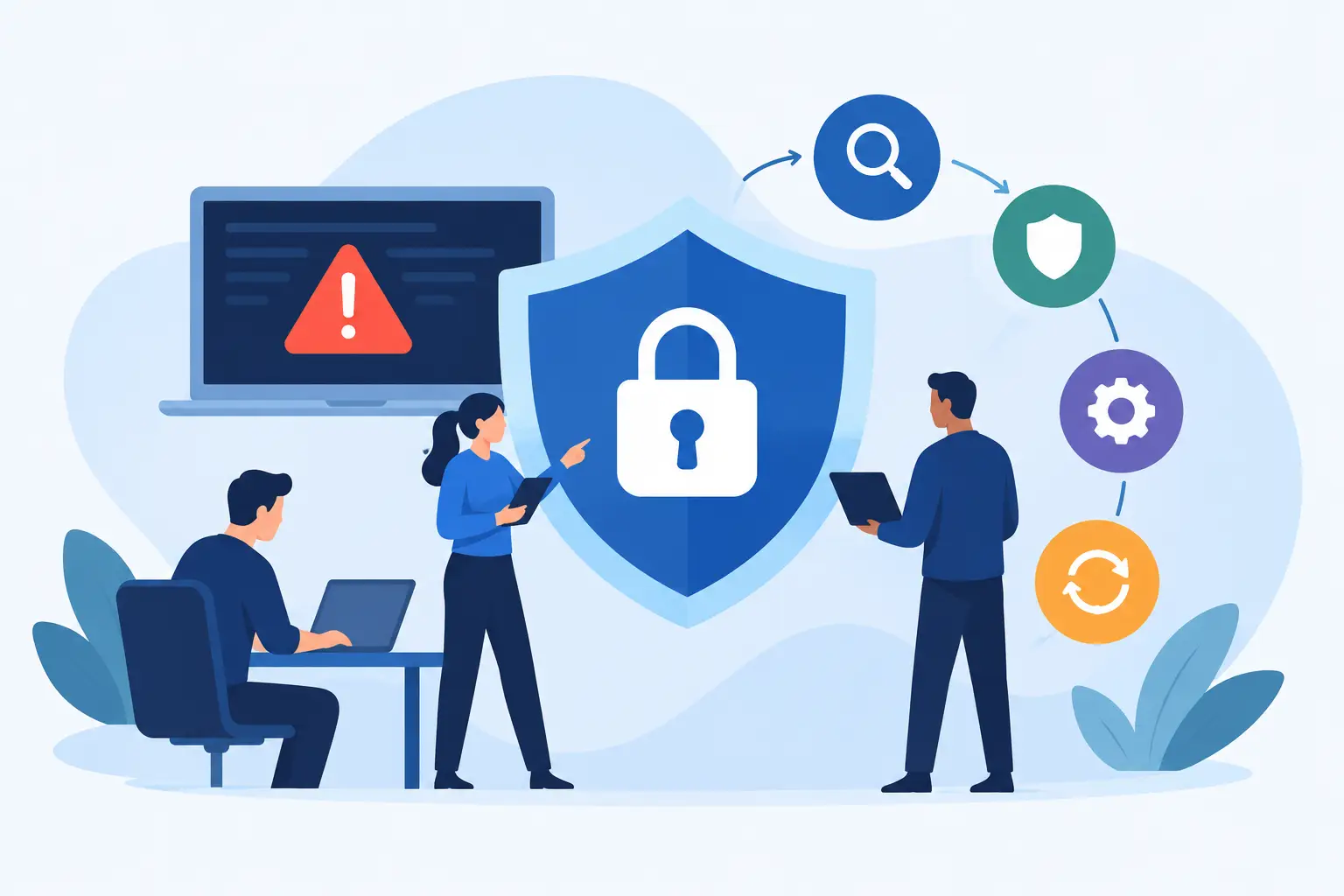
A practical incident response plan identifies who makes decisions, how alarms or concerns are communicated, when law enforcement is contacted, where employees and customers should move, and how the branch resumes operations afterward. It should also address documentation. Accurate reports, witness information, video preservation, and post-incident review help the organization respond to the immediate event and improve future prevention.
Response planning should include events that do not fit the traditional image of a bank robbery. Medical emergencies, disruptive individuals, suspicious packages, power outages, protests near the property, and cyber-related incidents with physical implications can all require coordinated action. The right response depends on the situation, but the need for a prepared team does not.
Choose a Security Partner That Understands Banking Operations
Banks need security providers that can operate professionally in customer-facing environments. Reliability matters. So do licensing, training standards, supervisory support, reporting quality, and the ability to adjust coverage when conditions change.
Before selecting a provider, decision-makers should ask how officers are screened and trained, how after-hours supervision works, what response support is available, and how incidents are documented. They should also ask whether the provider will conduct a site-specific assessment rather than offering a standard package without understanding the facility.
Springfield Private Security approaches bank protection as a business continuity function. That means building coverage around the client’s operational needs, from professional on-site officers and mobile patrols to risk assessments, early incident detection, and crisis response planning. The objective is protection that is visible when it should be visible and integrated when discretion is required.
Security Should Reinforce Customer Trust
A well-protected bank should feel orderly, not restrictive. Customers notice when a facility is clean, well-lit, professionally staffed, and prepared to handle concerns. Employees notice when leadership gives them practical support instead of asking them to manage risk alone.
The best time to evaluate bank security is before an incident exposes a gap. Review the site, test procedures, talk with branch staff, and adjust coverage to the risks that exist now. Preparedness is not about creating fear. It is about giving people the confidence to conduct business safely, every day.