A loading-dock confrontation, an unauthorized visitor in a restricted suite, or a medical emergency during a crowded event can become costly within minutes. The strongest security incident response examples have one thing in common: personnel act quickly, follow a defined chain of command, and protect people without creating unnecessary disruption to operations.
For business owners, property managers, and operations leaders, an incident response plan is more than a binder on a shelf. It establishes who makes decisions, how information moves, when emergency services are called, and how the site returns to normal. The right response will depend on the threat, the environment, and the authority available to on-site personnel. Still, the principles of calm control, accurate reporting, and early escalation apply across nearly every situation.
What Effective Incident Response Looks Like
A security response should begin with assessment, not assumptions. Officers or designated employees need to identify the immediate danger, separate people from the hazard when possible, request appropriate support, and preserve critical facts for management and law enforcement.
That does not mean every incident requires a dramatic intervention. A verbal dispute may be resolved through presence, communication, and separation. A credible threat, weapon sighting, fire, or serious medical emergency requires immediate emergency notification and a coordinated protective response. The goal is always to stabilize the situation while keeping staff, guests, tenants, and responders informed.
Clear post-incident documentation is equally important. Time stamps, names, descriptions, actions taken, witness statements, camera references, and property conditions can support insurance claims, workplace investigations, law enforcement inquiries, and future security improvements.
7 Security Incident Response Examples
1. Unauthorized Access at a Commercial Facility
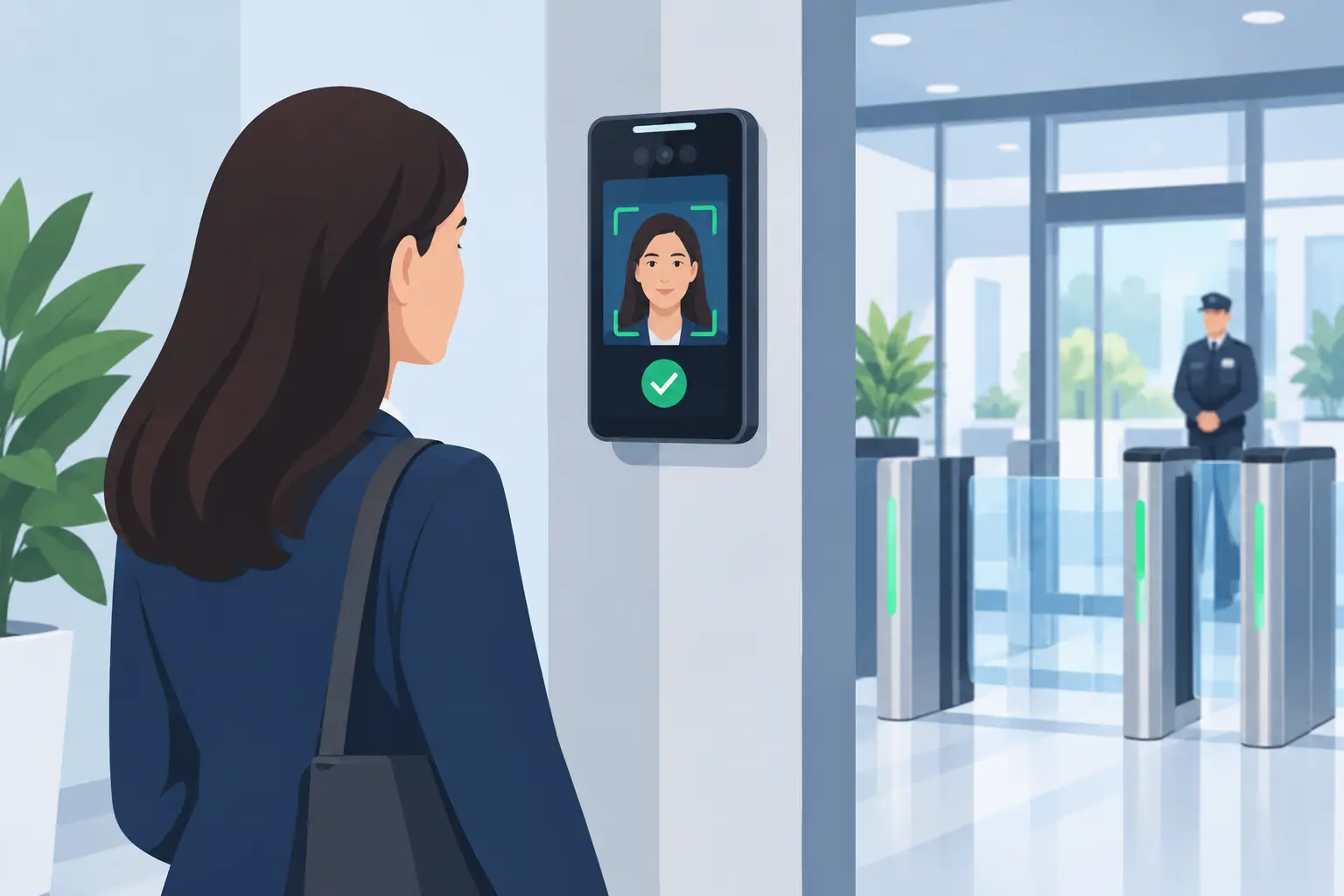
A person follows an employee through a secured door and enters an office area without a badge. An alert officer does not accuse or physically confront the individual unless conditions require it. Instead, the officer approaches professionally, asks for identification and a host, and directs the person to a reception or secure waiting area.
If the visitor cannot verify a legitimate purpose, the officer notifies site management and escorts the person from the restricted area. Access logs and camera footage should be reviewed to determine how entry occurred. The follow-up may be as simple as reminding employees not to allow tailgating, or it may reveal a need for better access controls, visitor procedures, or lobby coverage.
2. Workplace Violence Warning Signs
A supervisor reports that a recently terminated employee has made threatening statements. There may be no immediate violence, but delaying action can create avoidable exposure. Security should gather the available facts, document the statements, identify the individual’s known access points, and coordinate with management, human resources, and law enforcement when the threat is credible.
A practical response may include notifying front-desk staff, updating the individual’s photo and vehicle information, adjusting patrol routes, and assigning officers near likely entry points. Leadership should also decide how internal notifications will be handled. Sharing only necessary information protects employee privacy while ensuring those responsible for safety recognize the risk.
3. Medical Emergency During an Event
At a large corporate event or public gathering, a guest collapses near the entrance. The first priority is medical care. Security personnel call 911, request any on-site medical resources, provide aid within their training, and create a clear path for arriving responders.
At the same time, another team member manages the crowd. This protects the patient’s privacy, prevents bottlenecks, and keeps the venue operating safely. An event manager should be informed promptly, but security should avoid broadcasting personal medical details. After the incident, the team documents response times, actions taken, witnesses, and any operational adjustments needed for the remainder of the event.
4. Theft or Suspicious Activity in a Parking Area
A patrol officer observes someone checking vehicle door handles in a tenant parking lot after hours. The response should balance observation with safety. From a safe position, the officer records a description of the person, clothing, direction of travel, vehicle details, and behavior. If a crime appears to be in progress, the officer contacts law enforcement according to site protocol.
The officer should not abandon observation simply to chase a suspect through an unfamiliar area. Maintaining visual information and communicating accurate details to responding authorities is often more useful than a risky pursuit. A post-incident review may lead to improved lighting, patrol timing, camera coverage, signage, or tenant communication about vehicle security.
5. Fire Alarm or Hazardous Condition
A fire alarm activates in a multi-tenant building. Security officers begin the established evacuation procedure, direct occupants toward safe exits, and keep entrances clear for the fire department. They should not reset the alarm or allow reentry until the appropriate authority gives clearance.
The key challenge is maintaining order without creating panic. Officers need to direct people away from elevators, assist individuals who may need help evacuating, and account for known occupants when procedures allow. If smoke, fire, a gas odor, or another visible hazard is present, that information must be relayed immediately to emergency responders. Once the site is cleared, management can coordinate business continuity steps, including temporary relocation or controlled reopening.
6. Aggressive or Intoxicated Guest
A guest at a hotel, entertainment venue, or private event becomes verbally aggressive and refuses to leave a restricted area. A trained officer uses calm, direct communication: identify the behavior that must stop, state the available options, and set clear boundaries. Whenever possible, a second officer or supervisor should be present as a witness and support resource.
The response escalates only as the person’s conduct and safety risk require. If the guest becomes physically threatening, damages property, or refuses lawful directions on private property, management may request law enforcement support. Good incident reporting matters here because accounts of a verbal dispute can vary widely. Objective details, exact statements when possible, witness names, and video references protect the business and clarify why action was taken.
7. Cyber Incident Affecting Physical Operations
A ransomware alert, compromised access-control system, or suspicious login can quickly become a physical security issue. If badge readers, cameras, visitor records, or building systems are affected, the security team needs an immediate fallback plan. That may mean posting officers at critical entrances, switching to manual visitor logs, securing server rooms, and limiting access to high-value areas.
Physical and cyber teams should communicate through a designated incident lead. The cyber team focuses on containment and technical recovery, while on-site security protects facilities, equipment, and sensitive records from opportunistic access. This example shows why incident planning cannot remain isolated by department. A technology failure can change the security posture of an entire property.
The Decisions That Shape the Outcome
The best response is not always the most visible one. For a low-level access violation, a discreet intervention may preserve the client experience while correcting the problem. For a credible threat, visible security presence and rapid coordination with emergency services may be necessary. Site type, occupancy, time of day, local requirements, and the nature of the threat all affect the decision.
Organizations should define escalation thresholds before an incident occurs. Employees need to know when to call security, when security calls management, and when 911 is the correct first call. Security officers need clear post orders, current emergency contacts, site maps, and authority limits. Confusion in these areas is one of the most common reasons a manageable incident becomes an operational failure.
Training should also reflect real site conditions. A distribution center needs different scenarios than a bank branch, medical facility, retail center, or executive office. Tabletop exercises are useful, but they should be paired with practical walkthroughs that test radio coverage, access points, evacuation routes, and response times.
Turn Incidents Into Better Protection
Every incident creates an opportunity to identify a weak point before it is exploited again. After the immediate response is complete, leadership should review what was known, what actions were taken, where communication slowed down, and whether staffing or technology performed as intended. The purpose is not to assign blame for every imperfection. It is to make the next response faster, safer, and more controlled.
A dependable security partner brings disciplined personnel, clear reporting, and the ability to adapt coverage as risks change. When teams rehearse realistic scenarios and treat incident response as an operational function, they protect more than a building or event. They protect the confidence people have in the organization responsible for their safety.